
Table of Contents
Introduction: Cleaning Is Not a Low-Risk Job
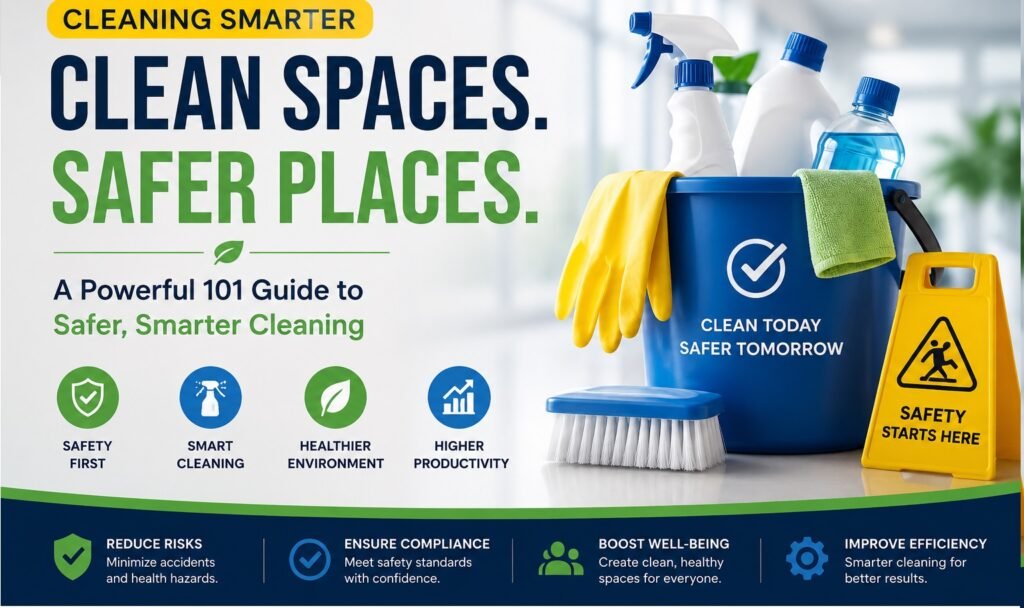
HSE precautions for cleaning services are sometimes underestimated because cleaning is often viewed as a routine activity.
Someone is wiping a desk.
Someone is mopping a floor.
Someone is cleaning a washroom.
Someone is emptying waste bins.
Someone is washing windows.
At first glance, none of these activities appears particularly hazardous.
But after years of looking at workplace activities from an HSE perspective, I have learned that the simplicity of a job does not necessarily mean the risk is simple.
A cleaner may be exposed to chemicals, biological contaminants, sharp objects, electrical equipment, wet floors, manual-handling hazards, working-at-height risks, poor ventilation, machinery, waste and even unpredictable emergency situations.
The cleaning industry also operates in many different environments.
An office cleaner faces one type of risk.
A hospital cleaner faces another.
An industrial cleaner may encounter chemicals, confined spaces or process equipment.
A hotel cleaner may deal with repetitive work and manual handling.
A window-cleaning worker may be exposed to significant work-at-height hazards.
Therefore, there is no single cleaning safety procedure that can safely cover every workplace.
The correct approach is to understand the task, the environment, the chemicals, the equipment, the people and the potential emergency before starting the work.
Why Cleaning Services Need Serious HSE Management
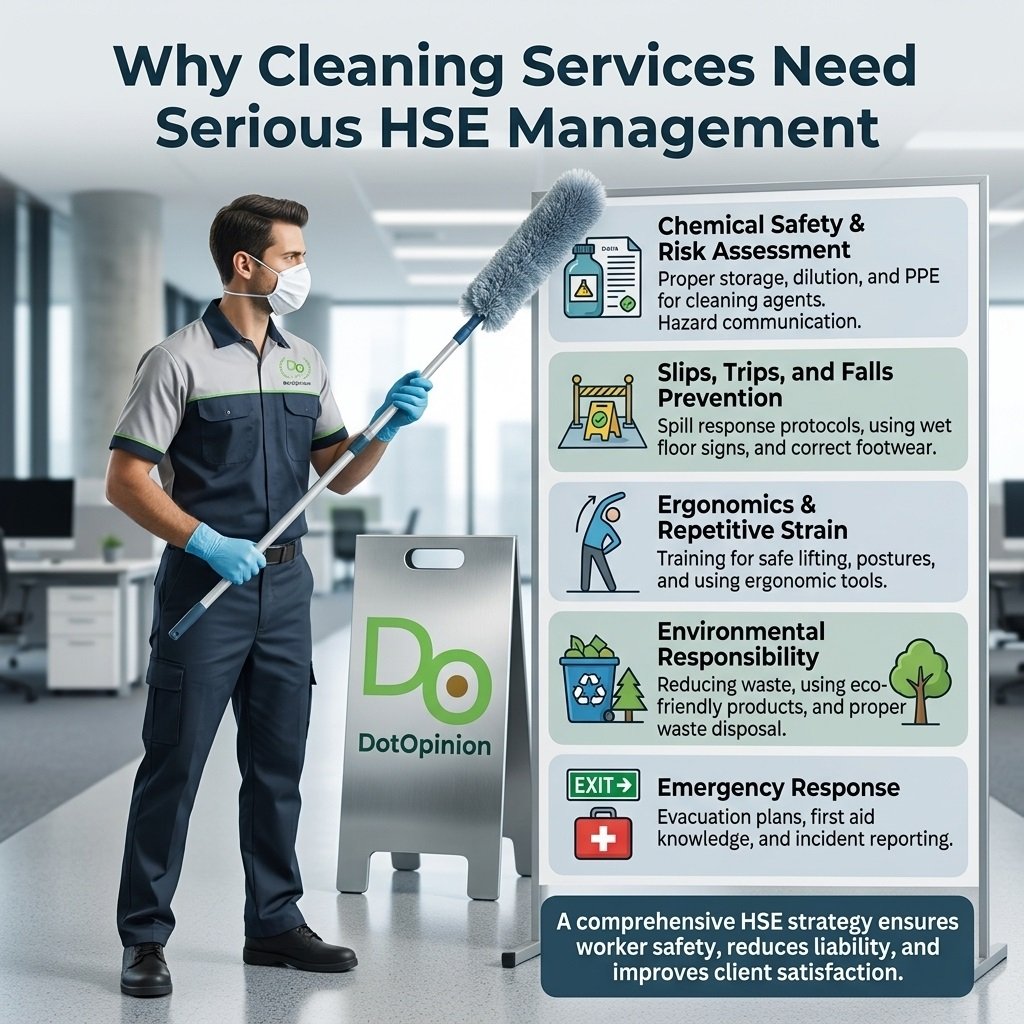
Cleaning is not simply about making a workplace look attractive.
Professional cleaning contributes to:
- Hygiene
- Infection prevention
- Workplace appearance
- Waste management
- Indoor environmental quality
- Slip prevention
- Facility maintenance
- Customer confidence
- Employee wellbeing
But the cleaning process itself introduces hazards.
For example, using a disinfectant may help control biological contamination, but incorrect chemical handling can expose the cleaner to harmful vapours.
Mopping a floor may improve hygiene, but leaving the floor wet without warning signs can create a slip hazard.
Cleaning a high window may improve the appearance of a building, but an unsuitable ladder or defective access equipment can create a fatal fall hazard.
Cleaning therefore has to be managed through the same basic HSE philosophy applied to other work:
Identify the hazard, assess the risk, control the risk and verify that the control works.
The U.S. Cleaning Industry Provides an Important Benchmark
The United States provides a useful benchmark because professional cleaning is a large and diverse service industry.
ISSA reported that, as of 2023, the U.S. had more than 3 million janitors and building cleaners working across more than 1.2 million businesses, while commercial cleaning industry revenue was forecast to exceed $108 billion in 2025. (ISSA)
The U.S. Bureau of Labor Statistics also reported 23 fatal occupational injuries in the janitorial services industry in 2024. (Bureau of Labor Statistics)
That number is small compared with the size of the workforce, but it demonstrates an important point:
Cleaning is not automatically a low-risk occupation simply because the work appears routine.
BLS also reported that building and grounds cleaning and maintenance occupations experienced 356 fatal occupational injuries in 2024, up from 337 in 2023. This broader category includes occupations beyond janitorial cleaning, so it should not be interpreted as a cleaning-services-only statistic. (Bureau of Labor Statistics)
For me, the lesson is straightforward:
The cleaning task must be assessed according to the actual hazard rather than the job title.
What Types of Cleaning Services Are Available?
When people search online for “cleaning services near me,” they may actually be looking for very different types of services.
A professional cleaning market can include:
| Cleaning service | Typical environment | Main HSE considerations |
|---|---|---|
| Office cleaning | Offices, corporate buildings | Chemicals, slips, ergonomics, electrical equipment |
| Commercial cleaning | Shops, commercial facilities | Public interaction, chemicals, waste |
| Industrial cleaning | Factories and plants | Chemicals, machinery, energy isolation |
| Hospital/healthcare cleaning | Hospitals and clinics | Infection control, biological hazards, sharps |
| Hotel cleaning | Hotels and accommodation | Chemicals, manual handling, repetitive work |
| School cleaning | Schools and educational facilities | Chemicals, children/public, slips |
| Carpet cleaning | Offices, hotels, homes | Chemicals, electrical equipment, wet surfaces |
| Window cleaning | Offices and high-rise buildings | Falls, access equipment, weather |
| Deep cleaning | Commercial/residential | Chemical exposure, manual handling |
| Floor care | Commercial/industrial | Machinery, chemicals, wet floors |
| Pressure washing | Buildings, yards, facilities | High pressure, electrical hazards, chemicals |
| Waste cleaning | Commercial/industrial | Sharps, biological and chemical exposure |
| Post-construction cleaning | Construction sites | Dust, debris, sharp materials, work at height |
| Hazardous-area cleaning | Industrial facilities | Process hazards, toxic substances, energy sources |
| Disinfection services | Offices, healthcare, public spaces | Chemical exposure, biological hazards |
| Specialized environmental cleaning | Contamination incidents | Chemical/biological exposure and waste |
This is why a cleaning company should not simply provide a generic “cleaning SOP.”
The procedure should reflect the actual work.
HSE Precautions for Cleaning Services Start With Risk Assessment
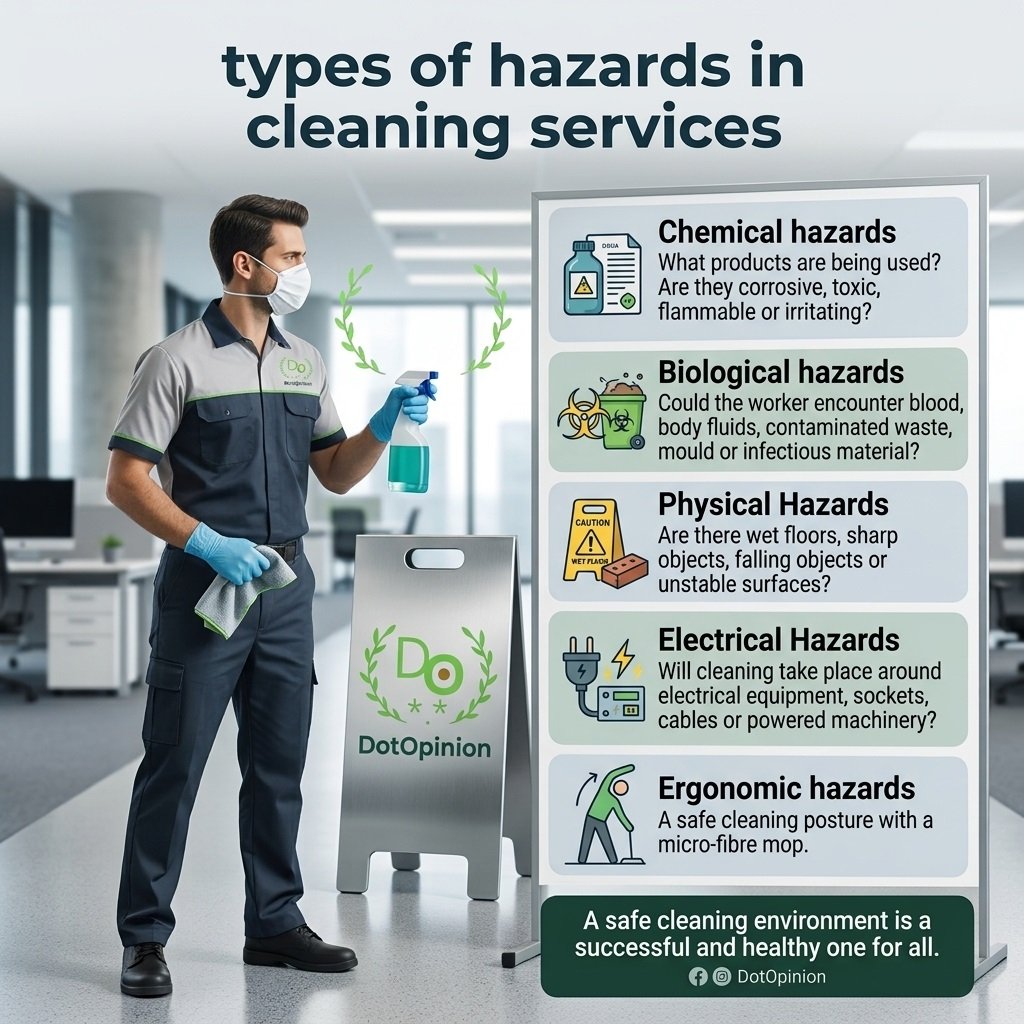
Before sending a cleaner into a workplace, the organization should understand the hazards associated with the task.
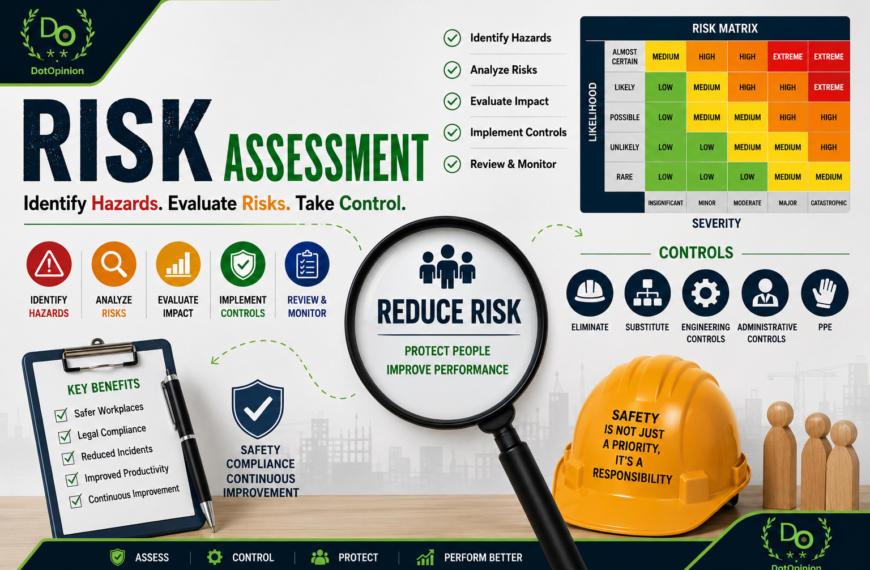
A practical cleaning risk assessment should consider:
Chemical hazards
What products are being used?
Are they corrosive, toxic, flammable or irritating?
Biological hazards
Could the worker encounter blood, body fluids, contaminated waste, mould or infectious material?
Physical hazards
Are there wet floors, sharp objects, falling objects or unstable surfaces?
Electrical hazards
Will cleaning take place around electrical equipment, sockets, cables or powered machinery?
Ergonomic hazards
Does the job involve repetitive movement, bending, pushing, pulling, lifting or awkward postures?
Work at height
Will ladders, platforms, scaffolds or specialized access systems be required?
Environmental conditions
Is the workplace hot, cold, poorly ventilated, noisy or dusty?
People and traffic
Will cleaners work around employees, visitors, vehicles or forklifts?
Emergency situations
What happens if a chemical spills, a worker falls or a fire alarm activates?
This is where a cleaning risk assessment becomes much more useful than a generic checklist.
Cleaning Chemicals: One of the Most Important HSE Risks
Cleaning chemicals deserve particular attention.
A cleaner may handle:
- Bleach
- Disinfectants
- Degreasers
- Acids
- Alkalis
- Solvents
- Glass cleaners
- Floor chemicals
- Toilet cleaners
- Carpet chemicals
- Detergents
- Sanitizers
- Aerosol products
The first principle should be:
Never assume that a cleaning chemical is harmless because it is sold for cleaning.
The product label and Safety Data Sheet should be reviewed.
Workers should know:
- Chemical identity
- Hazards
- Required PPE
- Dilution requirements
- Storage requirements
- Incompatibilities
- First-aid requirements
- Spill response
- Disposal requirements
The CDC specifically warns that cleaning and disinfectant products should not be mixed unless the manufacturer’s instructions say the combination is safe. It also recommends adequate ventilation and appropriate protective equipment when using bleach products. (CDC)
Never Mix Cleaning Chemicals Without Verified Compatibility
This deserves its own section because it is one of the simplest rules in cleaning safety.
Never mix bleach with ammonia or incompatible cleaners.
Certain combinations can generate toxic gases.
This is not a theoretical hazard.
OSHA documented a 2012 incident in which a janitor mixed incompatible cleaning fluids, resulting in chlorine gas exposure and hospitalization. (OSHA)
OSHA also documented a separate incident in which bleach and an acid-based cleaner reacted, producing chlorine gas and causing severe respiratory distress requiring hospital treatment. (OSHA)
Even more seriously, OSHA records a 2020 fatality involving a janitor who became unconscious after exposure to chemical vapours while cleaning bathrooms with chlorine bleach. (OSHA)
These incidents should change the way we think about cleaning.
A chemical cleaning task may take only five minutes.
But a wrong chemical decision can change someone’s life permanently.
Safe Chemical Handling for Cleaning Workers
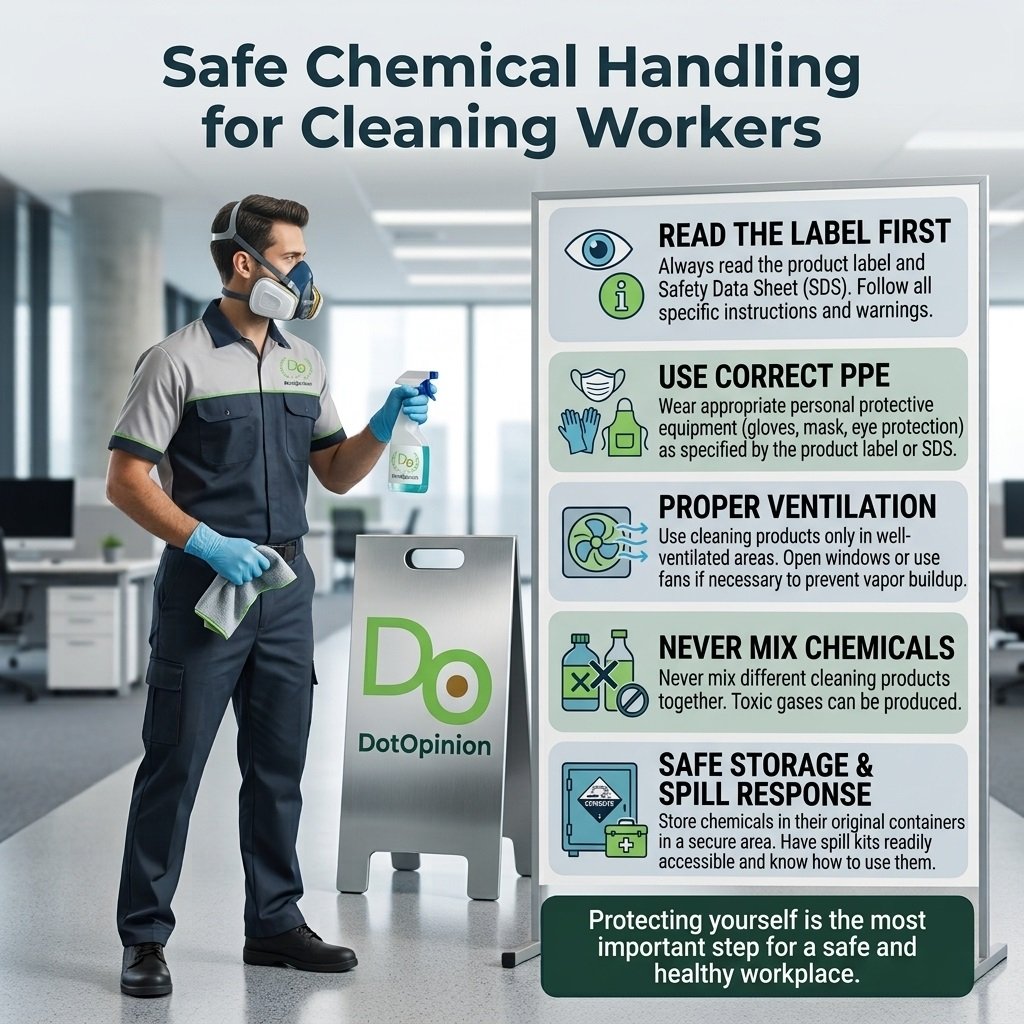
Good chemical handling practices include:
- Read the label before use.
- Review the SDS where required.
- Use the correct dilution.
- Never mix chemicals unless specifically authorized by the manufacturer.
- Use appropriate gloves.
- Use eye protection where splash exposure is possible.
- Provide adequate ventilation.
- Use respiratory protection only within an appropriate respiratory-protection program when required.
- Keep chemicals in labelled containers.
- Never transfer chemicals into an unlabelled food or beverage container.
- Store incompatible chemicals separately.
- Keep containers closed when not in use.
- Report damaged or leaking containers.
- Follow the manufacturer’s instructions for disposal.
A cleaner should never have to guess:
“How much should I add?”
If the procedure depends on guessing, the procedure needs improvement.
PPE for Cleaning Services
Personal protective equipment should be selected according to the hazard.
Potential PPE may include:
| Hazard | Possible PPE/control |
|---|---|
| Chemical splash | Chemical-resistant gloves, eye/face protection |
| Biological contamination | Gloves and appropriate protective clothing |
| Wet work | Suitable waterproof/chemical-resistant gloves |
| Dust | Suitable respiratory protection where risk assessment requires it |
| Sharp waste | Cut-resistant protection where appropriate |
| Slip hazard | Appropriate slip-resistant footwear |
| Noise | Hearing protection where assessment identifies hazardous exposure |
| Work at height | Appropriate fall-protection system where required |
PPE should not be the first and only control.
The hierarchy of controls should still be applied.
If a hazardous chemical can be replaced with a less hazardous product, substitution may be preferable.
If exposure can be controlled through ventilation or engineering controls, that should be considered.
PPE is important, but it is the last line of defense.
5S and Cleaning Services: More Than Just Housekeeping
This is where cleaning and HSE connect very naturally with 5S.
5S consists of:
Sort — Set in Order — Shine — Standardize — Sustain.
The U.S. EPA describes 5S as a system for reducing waste and improving productivity through an orderly workplace and visual controls. (US EPA)
NIST similarly describes 5S as:
- Sort
- Set in Order
- Shine
- Standardize
- Sustain
and explains its use in organizing workplaces and improving operational consistency. (NIST)
But from an HSE perspective, 5S should not be reduced to:
“Keep the workplace clean.”
It is much deeper.
1. Sort — Remove What Is Not Needed
The first question is:
Do we really need this here?
Cleaning cupboards often become storage areas for everything nobody knows where else to put.
Old chemicals.
Broken equipment.
Empty containers.
Unused brushes.
Expired products.
Old PPE.
Damaged electrical equipment.
The result is clutter.
Sorting means identifying what is needed and removing what is unnecessary.
This reduces:
- Trip hazards
- Storage problems
- Chemical confusion
- Fire load
- Unnecessary inventory
- Search time
2. Set in Order — A Place for Everything
Once unnecessary items are removed, everything that remains should have a defined location.
For example:
- Chemicals in designated storage
- PPE in designated locations
- Cleaning tools on labelled racks
- Waste containers identified
- Spill equipment accessible
- Emergency equipment unobstructed
The principle is simple:
A cleaner should be able to find the correct equipment without searching through a cupboard full of unrelated materials.
3. Shine — Clean and Inspect
Shine is often misunderstood.
It is not simply wiping the floor.
It means cleaning while also looking for abnormalities.
A cleaner may discover:
- A leaking pipe
- Damaged electrical cable
- Broken floor tile
- Oil leakage
- Corrosion
- Pest activity
- Blocked drainage
- Damaged equipment
- Missing signage
Therefore, cleaning personnel can become an important part of the organization’s hazard-identification system.
The person who cleans the floor every evening may notice a developing problem before anyone else does.
4. Standardize — Make the Safe Way the Normal Way
Once the workplace is organized, the method needs to be standardized.
This may include:
- Cleaning schedules
- Color-coded equipment
- Chemical labels
- Dilution instructions
- PPE requirements
- Cleaning sequences
- Inspection checklists
- Waste procedures
- Emergency instructions
- Equipment maintenance
- Training requirements
The objective is consistency.
A different worker should not perform the same cleaning task in five completely different ways.
5. Sustain — Maintain the Standard
This is where many 5S programs fail.
The workplace is cleaned and organized on Monday.
By Friday, everything has returned to the previous condition.
Sustain means making the improved condition part of normal work.
This requires:
- Routine inspections
- Supervisor checks
- Audits
- Training
- Worker ownership
- Corrective actions
- Management support
- Continual improvement
The Lean Enterprise Institute emphasizes that 5S is not merely a one-time cleanup exercise; it is intended to create standards and disciplined practices that reveal problems and support continual improvement. (Lean Enterprise Institute)
The Emergency Situations Cleaning Workers Should Be Prepared For
Cleaning services can encounter many emergency situations.
| Emergency | Example | Initial priority |
|---|---|---|
| Chemical spill | Cleaner knocks over chemical container | Isolate area and follow spill procedure |
| Toxic vapour | Incompatible chemicals react | Move away, raise alarm, obtain specialist help |
| Chemical splash | Cleaner receives chemical in eyes | Use emergency eyewash and obtain medical assistance |
| Fire | Chemical or combustible material ignites | Raise alarm and evacuate |
| Slip/fall | Wet floor or unstable access equipment | Provide first aid and control area |
| Electrical incident | Water contacts energized equipment | Isolate energy safely and keep people away |
| Sharps injury | Needle found in waste | Stop work and follow exposure procedure |
| Biological exposure | Contact with contaminated material | Decontaminate and seek appropriate medical advice |
| Gas release | Cleaning near gas equipment | Evacuate/isolate according to emergency plan |
| Confined-space emergency | Cleaning inside tank or confined area | Never attempt unplanned rescue; activate rescue plan |
| Working-at-height incident | Worker falls from access equipment | Raise alarm and activate emergency response |
| Fire alarm | Alarm activates during cleaning | Follow site emergency procedure |
| Major waste spill | Contaminated waste container fails | Isolate, contain and escalate |
What Should a Cleaner Do During a Chemical Emergency?
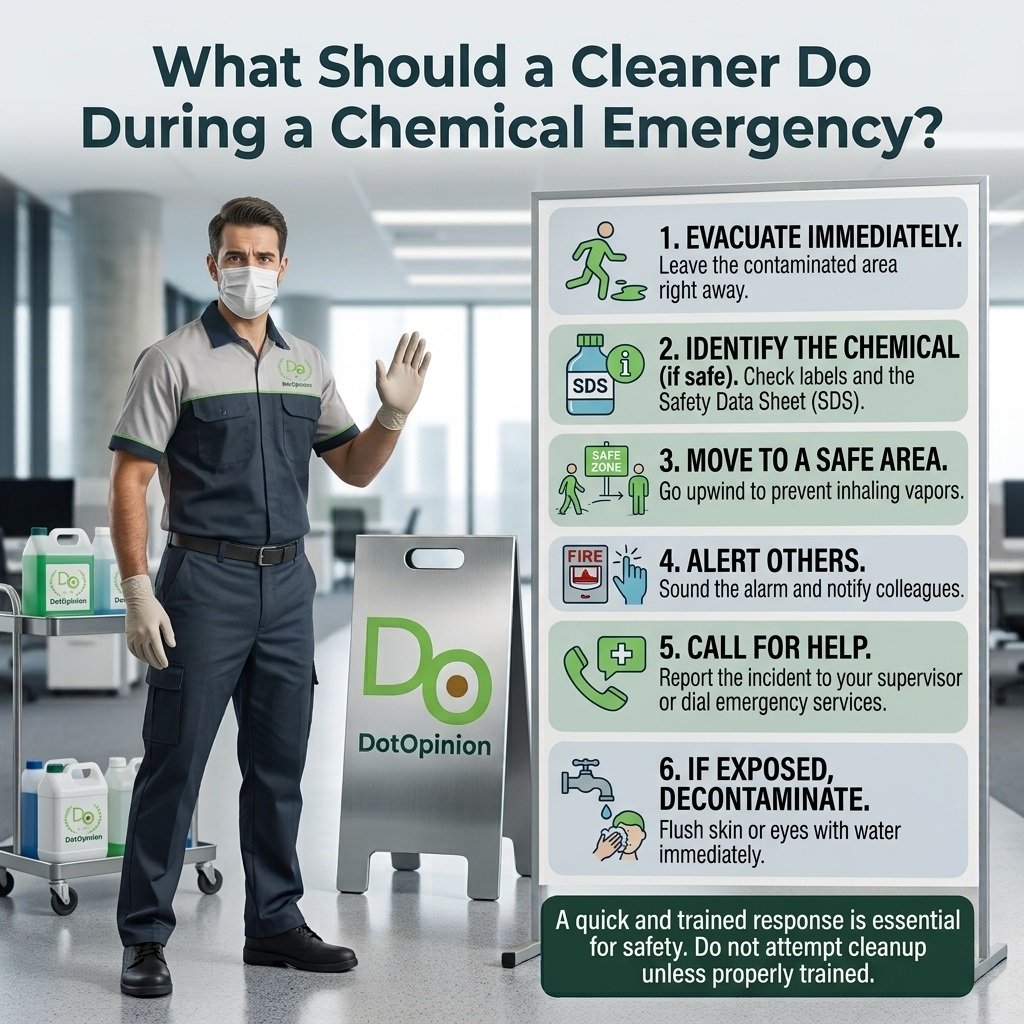
The answer depends on the chemical and the site emergency procedure.
But the first principle is:
Do not make the situation worse.
If an unknown chemical is released, a cleaner should not automatically attempt to clean it.
The worker should:
- Stop work.
- Move away from the release if exposed or at risk.
- Warn others.
- Raise the alarm.
- Follow the site’s emergency procedure.
- Obtain the SDS or chemical information if it can be done safely.
- Prevent access to the affected area.
- Use spill-response equipment only if trained and authorized.
- Seek medical assistance after exposure.
The CDC’s current chemical-emergency guidance similarly emphasizes getting away from the release, removing contamination from the body and obtaining help, while following instructions from authorities regarding evacuation or sheltering. (CDC)
Working at Height: Cleaning Windows, Glass and High Surfaces
This is one area where the phrase “it’s just cleaning” can become extremely dangerous.
OSHA’s accident investigation database contains several fatal incidents involving cleaners and falls from ladders or elevated work positions.
In May 2024, a janitor cleaning air-conditioning vents from a 12-foot stepladder fell and suffered fatal head trauma. (OSHA)
In October 2023, a janitorial-service worker preparing for window-washing operations from the 28th floor died after the anchor line and lifeline failed during setup. (OSHA)
These are powerful reminders that work-at-height controls must be taken seriously.
Before cleaning at height, consider:
- Can the task be completed from ground level?
- Can extension tools eliminate the need to climb?
- Is the ladder appropriate?
- Is it inspected?
- Is the surface stable?
- Is the worker trained?
- Is fall protection required?
- Is the equipment correctly installed?
- Has the weather been considered?
- Could people or objects below be exposed?
The safest height-related cleaning job is often the one where the worker does not have to climb at all.
Office Cleaning Services: What Should Be Included?
When organizations search for office cleaning services, they often focus on price and appearance.
A professional HSE-oriented cleaning specification should go further.
Office cleaning may include:
General areas
- Floors
- Desks
- Reception areas
- Meeting rooms
- Corridors
- Doors
- Glass surfaces
Hygiene areas
- Toilets
- Washrooms
- Handwashing facilities
- High-touch surfaces
Waste
- General waste
- Recycling
- Confidential waste
- Food waste
Periodic services
- Carpet cleaning
- Upholstery cleaning
- Window cleaning
- Floor polishing
- Deep cleaning
HSE considerations
- Chemical selection
- Slip prevention
- Safe storage
- PPE
- Waste segregation
- Electrical safety
- Manual handling
- Working at height
- Emergency response
A good office cleaning contract should therefore define not only what will be cleaned, but also how the work will be performed safely.
Environmental Impacts of Cleaning Services
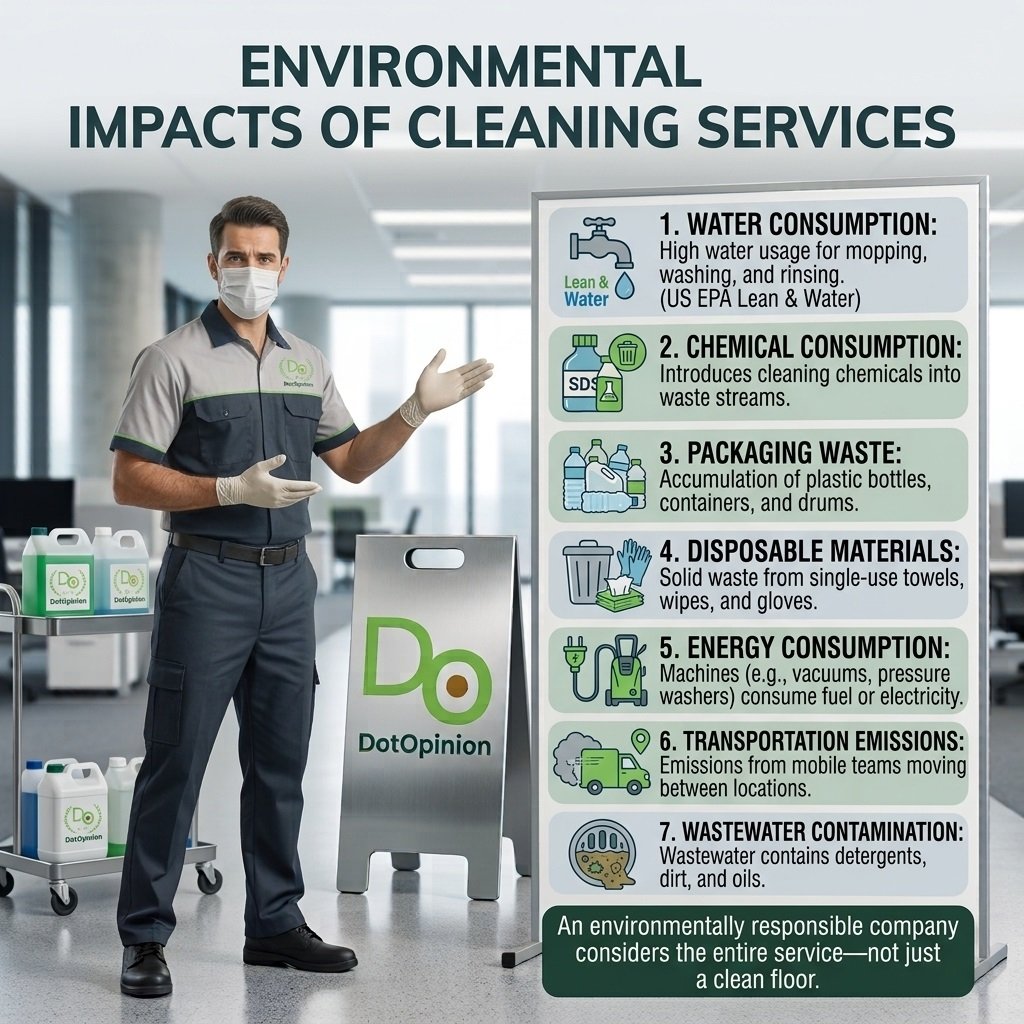
Cleaning creates environmental impacts of its own.
Some of the most important include:
Water consumption
Mopping, washing, pressure cleaning and rinsing can consume significant amounts of water.
The U.S. EPA’s Lean & Water guidance specifically identifies cleaning and rinsing activities as opportunities for reducing water waste. (US EPA)
Chemical consumption
Cleaning products can introduce chemical substances into wastewater and waste streams.
Packaging waste
Plastic bottles, containers, drums and disposable packaging can accumulate.
Disposable materials
Paper towels, wipes, gloves and other consumables create solid waste.
Energy consumption
Vacuum cleaners, floor machines, pressure washers and other equipment consume electricity or fuel.
Transportation
Mobile cleaning teams create emissions through transportation between customer locations.
Wastewater
Cleaning wastewater may contain detergents, disinfectants, oils, dirt or other contaminants.
Therefore, an environmentally responsible cleaning company should consider the entire service—not just whether the floor looks clean.
Green Cleaning: Is “Green” Enough?
The word “green” is widely used in cleaning marketing.
But an HSE/environmental professional should ask:
What actually makes the product environmentally preferable?
The U.S. EPA’s Safer Choice program evaluates cleaning-product ingredients and considers factors including human and environmental health, product performance, lifecycle considerations, energy efficiency and water savings. (US EPA)
This is a useful benchmark.
A more responsible cleaning program can consider:
- Less hazardous chemicals
- Concentrated products where appropriate
- Accurate dilution
- Reusable equipment
- Microfiber systems
- Reduced water consumption
- Appropriate waste segregation
- Recyclable packaging
- Responsible chemical disposal
- Energy-efficient equipment
- Local sourcing where practical
- Efficient route planning
The objective is not simply to buy something labelled “green.”
The objective is to reduce environmental impact while maintaining the required cleaning performance.
Cleaning and ISO 45001
Cleaning contractors working within organizations with an ISO 45001 management system should not be treated as an afterthought.
Contractor activities can introduce hazards into the workplace.
The organization should consider:
- Contractor competency
- Risk assessment
- Induction
- Chemical management
- PPE
- Emergency arrangements
- Communication
- Incident reporting
- Permit requirements where applicable
- Monitoring
- Performance evaluation
For example, if a cleaning contractor is using chemicals inside a client’s facility, both parties should understand who is responsible for chemical information, emergency response, storage and training.
A contract should not transfer responsibility through paperwork and then leave the worker unsupported.
Cleaning and ISO 14001
Cleaning services also have an environmental dimension.
Under an environmental management approach, organizations should consider the environmental aspects associated with their activities and services.
That can include:
- Water use
- Chemical use
- Waste generation
- Wastewater
- Packaging
- Energy
- Transportation
- Pollution prevention
- Emergency spills
ISO’s environmental-management material explains that environmental aspects concern elements of an organization’s activities, products or services that interact or can interact with the environment and can cause environmental impacts. (ISO)
Therefore, cleaning can fit naturally into an organization’s environmental-management system.
A Practical Cleaning HSE Inspection
If I were conducting an HSE inspection of a cleaning operation, I would not start by checking whether the floors are shiny.
I would ask:
| Area | What I would check |
|---|---|
| Chemicals | Labels, SDSs, storage, compatibility |
| PPE | Suitability, condition and use |
| Equipment | Inspection, electrical condition, guarding |
| Ladders | Condition, suitability and use |
| Floors | Slip hazards and wet-floor controls |
| Waste | Segregation, handling and disposal |
| Storage | Organization and 5S |
| Emergency | Spill, fire and exposure arrangements |
| Training | Competency and records |
| First aid | Availability and suitability |
| Eyewash | Where chemical splash risk exists |
| Ventilation | Adequate for chemical use |
| Contractor control | Induction and supervision |
| Environment | Water, chemical and waste impacts |
| Documentation | Risk assessments, SOPs and inspection records |
Then I would speak to the cleaners.
Not just the supervisor.
Because the person performing the task every day often knows exactly where the procedure works—and where it does not.
The Five Questions Every Cleaning Supervisor Should Ask
Before starting a new cleaning task:
1. What can hurt the worker?
2. What can damage the customer’s property?
3. What chemical or equipment hazards are involved?
4. What could happen if something goes wrong?
5. Does the worker know what to do in an emergency?
If these questions are answered before the job starts, many incidents can be prevented.
HSE Documentation for Cleaning Services
This is also an area where professional HSE support can add significant value.
Depending on the organization and scope, cleaning contractors may need:
- HSE Policy
- Risk Assessments
- Method Statements
- Safe Work Procedures
- Chemical Handling Procedures
- SDS Register
- PPE Matrix
- COSHH-style chemical assessments where applicable
- Emergency Response Procedures
- Spill Response Procedures
- Waste Management Procedures
- Training Records
- Equipment Inspection Checklists
- Ladder Inspection Checklists
- Cleaning Inspection Checklists
- Incident Reporting Forms
- Contractor HSE Induction
- Environmental Aspect and Impact Registers
- Emergency Drill Records
- 5S Audit Checklists
- Corrective Action Registers
The exact documentation should be proportionate to the risk and applicable legal requirements.
The objective should not be to create a mountain of paperwork.
It should be to create useful documents that help workers perform the job safely.
What I Believe Makes a Good Cleaning HSE System
After years of studying HSE principles and seeing how safety systems work in real workplaces, I believe a good cleaning safety system should have five characteristics.
Simple
Workers should understand it.
Practical
It should reflect the actual job.
Visible
Important controls should be easy to identify.
Measurable
The organization should be able to determine whether performance is improving.
Continually improving
Incidents, near misses, inspections and worker feedback should lead to improvements.
This is also where 5S becomes powerful.
It is not about making a workplace look beautiful for an audit.
It is about creating a workplace where abnormalities become visible.
From Cleaning to Safety Culture
There is an interesting relationship between cleaning and safety culture.
A worker who notices a small leak and reports it is contributing to safety.
A cleaner who finds a damaged electrical cable and stops using the equipment is contributing to safety.
A supervisor who replaces an unsafe chemical with a safer alternative is contributing to safety.
A manager who listens to cleaners when they report a hazard is contributing to safety.
This is how safety culture develops.
Not through slogans.
Through thousands of small decisions made correctly.
Final Thoughts: Cleaning Should Never Be “Just Cleaning”
A clean workplace is important.
But a safe cleaning operation is even more important.
The person holding the mop, vacuum cleaner, chemical container, ladder or pressure washer is a worker who deserves the same level of protection that we expect for workers in any other industry.
The cleaning task may take ten minutes.
The consequences of one mistake can last a lifetime.
That is why HSE precautions for cleaning services should cover the complete operation:
Risk assessment → Chemical safety → PPE → Equipment → 5S → Training → Emergency preparedness → Environmental protection → Inspection → Continual improvement.
And perhaps the most important principle is this:
Do not measure cleaning quality only by how clean the workplace looks. Measure it by whether the workplace is cleaner without creating a new hazard.
A floor covered with chemicals is not safe simply because it is clean.
A perfectly polished floor is not a success if someone slips on it.
A spotless office is not a safe workplace if the cleaner was exposed to toxic vapours.
A clean window is not worth a worker’s life.
Good cleaning should improve the workplace—not create another HSE problem.
Looking for Professional HSE Support?
Cleaning companies, offices, commercial facilities and contractors increasingly need more than a cleaning schedule.
They need practical HSE systems.
Through DotOpinion, I am building a professional platform focused on practical Environment, Health & Safety knowledge and documentation.
I can support organizations remotely with assignments such as:
HSE Risk Assessments
Cleaning-Service HSE Procedures
Chemical Handling Procedures
5S Implementation & Audit Documentation
Emergency Response Plans
HSE Inspection Checklists
Environmental Aspect & Impact Assessments
Waste Management Documentation
ISO 45001 Documentation Support
ISO 14001 Documentation Support
Contractor HSE Documentation
HSE Training Materials
Cleaning-Service Method Statements
My approach is simple:
Understand the operation → identify the hazards → develop practical controls → document them clearly → help the organization maintain and improve them.
If your organization needs an HSE professional for a remote documentation, assessment or consultancy assignment, feel free to connect with me.
A Final Question for Readers
The next time you see a cleaner working in an office, hospital, hotel, factory or commercial building, take a moment to look beyond the clean floor.
Ask yourself:
What hazards did that worker have to manage to make this place look clean?
That question changes the way we see cleaning.
And once we start seeing the hazards, we can start controlling them.
Clean workplace.
Safe worker.
Healthy environment.
Better HSE culture.
Safety, Green Cleaning
Suggested Aricles from Dotopinion
- HSE Risk Assessment
- FLAMMABLE AND COMBUSTIBLE LIQUIDS
- HSE Preparedness in Storage Areas: A Powerful 101 Guide to Safer Storage
- Occupational Health and Safety: Management System
- Fire Safety
This creates a connected HSE knowledge cluster rather than isolated blog posts.

 By
By