
Table of Contents
Introduction
Fire safety is the practice of preventing fires, minimizing fire-related risks, and protecting people, property, and the environment from the devastating effects of fire. It involves a combination of proper planning, regular inspections, employee education, and the use of reliable fire safety equipment such as smoke detectors, alarms, sprinklers, and fire extinguishers. Effective fire safety also requires organizations to establish a comprehensive fire safety plan, display clear fire safety signs, and conduct routine fire safety training so everyone knows how to respond during an emergency. Compliance with regulations, including the Fire Safety Act, the Fire Safety Order 2005, and the Health and Safety at Work etc. Act 1974, helps businesses maintain safe workplaces and meet legal obligations. Whether at home, school, or in the workplace, practicing fire safety reduces injuries, saves lives, limits property damage, and ensures a faster, safer evacuation when emergencies occur.
What is Fire Safety?
Fire safety is the practice of preventing fires, protecting lives and property, reducing risks, and ensuring safe emergency preparedness and evacuation.
Why Fire Safety Matters
Fire safety matters because it protects lives, prevents property damage, reduces business disruptions, ensures legal compliance, and prepares people to respond quickly and safely during emergencies.
Act 1974 Health and Safety
The Health and Safety at Work etc. Act 1974 (HSWA) is the primary workplace health and safety legislation in the United Kingdom. It places a legal duty on employers to protect the health, safety, and welfare of employees and others affected by their activities by managing risks, providing training, safe equipment, and safe working conditions.
1974 Fire Safety Order 2005
The Regulatory Reform (Fire Safety) Order 2005 is the principal fire safety legislation for non-domestic premises in England and Wales. It requires the responsible person to conduct fire risk assessments, implement fire prevention measures, maintain fire protection systems, provide employee training, and ensure safe evacuation procedures to protect occupants.
10 Major Fire Safety Golden Rules
- Know Your Escape Routes – Always identify the nearest emergency exits and evacuation routes before an emergency occurs.
- Keep Fire Exits Clear – Never block doors, stairways, or escape paths with furniture, equipment, or storage.
- Install and Maintain Fire Safety Equipment – Regularly inspect smoke alarms, fire extinguishers, sprinklers, and other fire protection systems.
- Follow Fire Safety Rules – Adhere to workplace and home fire safety policies and comply with all relevant regulations.
- Handle Electrical Equipment Safely – Avoid overloading sockets, replace damaged cables, and switch off unused electrical appliances.
- Store Flammable Materials Properly – Keep fuels, chemicals, and combustible materials away from heat sources and open flames.
- Never Leave Cooking or Open Flames Unattended – Stay alert when cooking or using candles, heaters, or other ignition sources.
- Participate in Fire Safety Training – Learn how to use fire extinguishers, raise the alarm, and evacuate safely during emergencies.
- Test Fire Alarms Regularly – Check smoke detectors and alarm systems routinely to ensure they operate correctly.
- Call Emergency Services Immediately – If a fire occurs, activate the alarm, evacuate everyone safely, and contact the fire department without delay.
Fire Safety Equipment
Fire Safety Equipment Required at Every Site and Fire Hazard Location
Fire safety equipment is essential for protecting lives, property, and business operations. Every workplace, commercial building, industrial facility, warehouse, school, hospital, and residential complex should have appropriate fire protection equipment based on the level of fire risk. Regular inspection, maintenance, and employee training ensure that this equipment functions effectively during an emergency.
1. Fire Extinguishers
Fire extinguishers are the first line of defense against small fires. Different fire classes require different extinguishers.
| Fire Extinguisher Type | Suitable For |
|---|---|
| Water | Wood, paper, cloth (Class A) |
| Foam | Class A and flammable liquids (Class B) |
| Dry Powder | Class A, B, C, and electrical fires |
| Carbon Dioxide (CO₂) | Electrical equipment and flammable liquids |
| Wet Chemical | Cooking oils and kitchen fires (Class F) |
Best Practice: Install extinguishers near exits, machinery, kitchens, electrical panels, and fuel storage areas. Inspect them monthly and service them annually.
Here is a concise, professional section you can add to your article:
Fire Water Pump System: Operation, Utility & Coordination
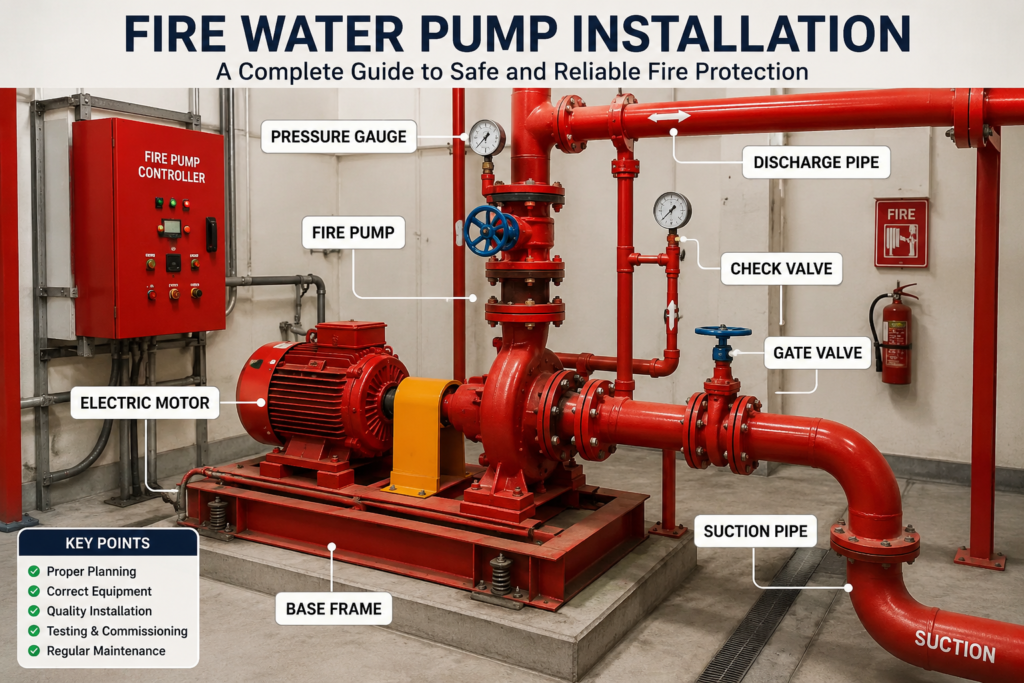
A fire water pump system is a critical component of a facility’s fire protection infrastructure. It supplies the required water flow and pressure to firefighting systems such as fire hydrants, fire sprinklers, fire hose cabinets, deluge systems, and emergency showers, depending on the facility’s design.
The system typically includes fire pumps, jockey pumps, suction and discharge piping, valves, pressure gauges, controllers, and associated equipment. During a fire emergency, the main fire pump provides the necessary water pressure and flow to ensure that firefighting systems operate effectively.
Reliable operation requires proper coordination between the Fire & Safety, HSE, Maintenance, Electrical, Utilities, Security, and Emergency Response teams. The maintenance team should conduct regular inspections, preventive maintenance, pump testing, valve checks, pressure monitoring, and equipment servicing according to the applicable standards and manufacturer’s recommendations.
The operation team should ensure that the fire water tank has adequate water, valves are correctly positioned, pumps remain available, and no unauthorized isolation or modification is carried out. Emergency response teams should understand the fire water network, pump-starting arrangements, hydrant locations, and emergency procedures.
Effective coordination, routine testing, preventive maintenance, and proper documentation help ensure that the fire water pump system remains available, reliable, and ready for emergency operation when required.
You can place this section after “What Is a Fire Water Pump System?” or before your installation procedure section.
2. Fire Alarm System
A fire alarm system provides an early warning, allowing occupants to evacuate safely before the fire spreads.
Components include:
- Smoke detectors
- Heat detectors
- Manual call points (break glass units)
- Audible alarms and sirens
- Flashing warning lights
- Fire alarm control panel
The system should be tested regularly to ensure reliability.
3. Smoke Detectors
Smoke detectors identify smoke in its early stages and activate the fire alarm.
Common locations include:
- Offices
- Corridors
- Bedrooms
- Warehouses
- Storage rooms
- Hotels
- Hospitals
They should be tested monthly, and batteries should be replaced according to the manufacturer’s recommendations.
4. Heat Detectors
Heat detectors activate when the temperature rises rapidly or reaches a preset limit.
They are commonly installed in:
- Kitchens
- Boiler rooms
- Mechanical rooms
- Parking garages
- Dust-producing environments
Heat detectors are suitable where smoke detectors may generate false alarms.
5. Fire Hose Reel
A fire hose reel supplies a continuous stream of water for controlling Class A fires.
Typical installation areas include:
- Industrial plants
- Shopping malls
- Warehouses
- Office buildings
- Educational institutions
Only trained personnel should use hose reels.
6. Automatic Fire Sprinkler System
Sprinkler systems automatically release water when heat activates the sprinkler head nearest the fire.
Benefits:
- Controls fires quickly
- Reduces property damage
- Limits smoke production
- Increases evacuation time
- Improves life safety
Sprinklers are recommended for high-occupancy and high-value buildings.
7. Fire Blanket
Fire blankets extinguish small fires by cutting off the oxygen supply.
Suitable for:
- Commercial kitchens
- Laboratories
- Workshops
- Homes
They are particularly effective for cooking oil fires and can also be used to wrap around a person whose clothing has caught fire.
8. Emergency Exit Signs
Clearly visible exit signs help occupants locate safe evacuation routes during emergencies.
Modern exit signs are:
- Illuminated
- Battery-backed
- Highly visible in smoke-filled environments
They should comply with local safety standards.
9. Emergency Lighting
Emergency lighting activates automatically during power failures.
It helps people safely evacuate by illuminating:
- Staircases
- Corridors
- Emergency exits
- Assembly routes
Regular testing ensures dependable operation.
10. Safety Signs
Fire safety signs communicate important safety information quickly.
Common signs include:
- Fire Exit
- Fire Extinguisher Location
- Fire Alarm Call Point
- No Smoking
- Fire Assembly Point
- Fire Door Keep Shut
- Emergency Escape Route
Signs should remain clean, visible, and unobstructed.
11. Safety Box
A fire safety box stores essential emergency equipment in one secure location.
It may contain:
- Fire extinguisher
- Fire blanket
- Emergency torch
- First aid kit
- Fire gloves
- Safety goggles
- Emergency whistle
- Safety instructions
Keeping these items together improves emergency preparedness.
12. Fire Hydrant System
Fire hydrants provide firefighters with access to a reliable water supply during large fire incidents.
Hydrants should be:
- Clearly marked
- Easily accessible
- Free from obstructions
- Inspected and maintained regularly
13. Personal Protective Equipment (PPE)
Personnel responsible for emergency response should have access to appropriate PPE.
Typical PPE includes:
- Fire-resistant clothing
- Safety helmets
- Fire-resistant gloves
- Safety boots
- Eye protection
- Respiratory protection
- High-visibility jackets
Proper PPE reduces the risk of injury during fire emergencies.
14. First Aid Kit
A well-stocked first aid kit should be readily available to treat minor injuries while awaiting professional medical assistance.
Recommended contents include:
- Sterile dressings
- Bandages
- Burn dressings
- Adhesive tape
- Antiseptic wipes
- Disposable gloves
- Scissors
- Eye wash solution
15. Emergency Communication System
Effective communication is essential during emergencies.
Systems may include:
- Public address (PA) systems
- Emergency telephones
- Two-way radios
- Mass notification systems
- Mobile emergency alert applications
Clear communication helps coordinate evacuation and emergency response.
16. Fire Safety Checklist
Every site should maintain a fire safety checklist covering:
- Fire extinguisher inspections
- Alarm testing
- Emergency lighting checks
- Exit route inspections
- Fire door maintenance
- Housekeeping standards
- Electrical safety inspections
- Employee fire safety training
- Evacuation drills
- Equipment servicing records
Routine inspections help identify hazards before they lead to an incident.
Essential Fire Safety Equipment Checklist
| Equipment | Required at Most Sites |
|---|---|
| Fire Extinguishers | ✔ |
| Fire Alarm System | ✔ |
| Smoke Detectors | ✔ |
| Heat Detectors | ✔ |
| Fire Hose Reel | ✔ (where applicable) |
| Fire Sprinkler System | ✔ (risk-based) |
| Fire Blanket | ✔ |
| Emergency Exit Signs | ✔ |
| Emergency Lighting | ✔ |
| Fire Safety Signs | ✔ |
| Fire Safety Box | ✔ |
| Fire Hydrants | ✔ (large facilities) |
| Personal Protective Equipment | ✔ |
| First Aid Kit | ✔ |
| Emergency Communication System | ✔ |
| Fire Safety Checklist | ✔ |
Fire Extinguisher
Fire Extinguishers, Fire Classes, and Lithium-Ion Battery Fires
Fires are classified based on the fuel involved, which determines the right extinguishing method:
- Class A – Ordinary combustibles (wood, paper, cloth, plastic). Extinguished with water, foam, or dry chemical agents.
- Class B – Flammable liquids and gases (petrol, oil, paint, propane). Requires foam, CO₂, or dry chemical extinguishers; never water, as it spreads the fire.
- Class C – Electrical fires involving live equipment. CO₂ or dry chemical (non-conductive) extinguishers are used; water is avoided due to shock risk.
- Class D – Combustible metals (magnesium, titanium, sodium). Requires special dry powder agents designed for metal fires.
- Class K (or F) – Cooking oils and fats. Wet chemical extinguishers are used, as they cool and form a soap-like layer to smother the fire.
Common Extinguisher Types
- Water extinguishers – Class A only.
- Foam extinguishers – Class A and B.
- CO₂ extinguishers – Class B and electrical fires; leave no residue.
- Dry powder extinguishers – Multi-purpose (A, B, C); effective but messy.
- Wet chemical extinguishers – Specifically for Class K/F kitchen fires.
Lithium-Ion Battery Fires
Lithium-ion battery fires are a growing concern due to their use in phones, laptops, EVs, and power tools. These fires result from “thermal runaway,” a chain reaction that produces intense heat, toxic gases, and re-ignition risk—making them different from standard electrical fires. Standard Class C extinguishers are often insufficient.
Specialized lithium-ion (Class D or specially rated Li-ion) extinguishers use agents like aqueous vermiculite dispersion (AVD) or specialized dry powder/lithium-specific formulations that cool the battery, suppress toxic gas release, and prevent reignition. In many cases, large volumes of water are also used industrially to cool EV battery packs, though specialized extinguishers are preferred for smaller devices.
Choosing the correct extinguisher for the specific fire class is critical for safety and effective suppression.
Fire Safety Signs
Fire Safety Plan
A Fire Safety Plan (FSP) is a formal, documented emergency preparedness and response plan developed to prevent fire incidents, minimize their consequences, and ensure the safe evacuation of occupants in the event of a fire. It serves as a key component of an organization’s fire risk management system by defining the procedures, responsibilities, and resources necessary to effectively respond to fire emergencies while protecting life, property, business continuity, and the environment.
Key Components of a Fire Safety Plan
A comprehensive Fire Safety Plan should include, but not be limited to, the following elements:
- Fire risk assessment and identification of fire hazards.
- Description of the premises, occupancy, and operational activities.
- Emergency response procedures and fire emergency protocols.
- Roles and responsibilities of management, fire wardens, emergency coordinators, and employees.
- Building layout and floor plans showing emergency exits, evacuation routes, assembly points, and refuge areas.
- Locations of fire safety equipment, including fire extinguishers, fire hose reels, hydrants, fire alarm systems, sprinkler systems, and emergency shut-off controls.
- Emergency communication procedures and contact details for internal response teams and external emergency services.
- Procedures for assisting visitors, contractors, and persons with disabilities during evacuation.
- Inspection, testing, and preventive maintenance schedules for fire protection systems.
- Fire safety training requirements, induction programs, and emergency evacuation drill schedules.
- Documentation, record-keeping, and incident reporting procedures.
Review and Management Approval
The Fire Safety Plan should be prepared by a competent person with appropriate knowledge of fire safety legislation, fire protection systems, and emergency planning. Prior to implementation, the plan should undergo a comprehensive review to verify its technical accuracy, operational feasibility, and compliance with applicable legal and organizational requirements.
Following the review process, the Fire Safety Plan should be formally approved by senior management or the designated responsible person. Management approval demonstrates the organization’s commitment to fire safety, ensures the allocation of necessary resources for implementation, and establishes accountability for maintaining an effective fire safety management system.
Review and Revision
The Fire Safety Plan is a controlled document and should be reviewed at least annually. However, it must also be revised whenever significant changes occur, including:
- Modifications to the building layout or occupancy.
- Introduction of new equipment, machinery, or hazardous materials.
- Changes in operational processes or work activities.
- Updates to applicable legislation, regulations, or standards.
- Following a fire incident, emergency response, or evacuation drill to incorporate lessons learned.
All revisions should be documented, approved by management, and communicated to relevant personnel to ensure continued effectiveness.
Applicable Standards and Guidelines
The Fire Safety Plan should be developed, implemented, and maintained in accordance with applicable national legislation and internationally recognized standards, including:
- NFPA 1 – Fire Code
- NFPA 101 – Life Safety Code
- NFPA 10 – Standard for Portable Fire Extinguishers
- ISO 45001:2018 – Occupational Health and Safety Management Systems
- Regulatory Reform (Fire Safety) Order 2005 (United Kingdom)
- Fire Safety Act (where applicable)
- National Building Codes and Local Fire Safety Regulations
- Requirements of the local Fire Authority or Authority Having Jurisdiction (AHJ)
Compliance with these standards ensures that the Fire Safety Plan meets legal obligations, reflects industry best practices, and provides a structured framework for preventing fires, protecting occupants, and maintaining business resilience.
Fire Safety Checklists
Fire safety checklists are essential tools used to systematically inspect workplaces, identify potential fire hazards, verify compliance with fire safety requirements, and ensure that fire protection systems remain in a safe and operational condition. Since every workplace has different hazards, a single checklist cannot address all fire safety requirements. Therefore, organizations should develop and implement checklists that are specific to the area, equipment, and activities being inspected.
Area Fire Safety Checklist
An Area Fire Safety Checklist is used to inspect a specific location or work area, such as offices, warehouses, workshops, laboratories, kitchens, electrical rooms, fuel storage areas, or production facilities. The purpose of this checklist is to verify that the area is free from fire hazards and complies with applicable fire safety standards.
Typical inspection items include:
- Housekeeping and waste management.
- Storage of combustible and flammable materials.
- Accessibility of emergency exits and evacuation routes.
- Condition of fire doors and emergency lighting.
- Visibility of fire safety signs.
- Availability and accessibility of fire extinguishers.
- Condition of electrical installations and wiring.
- Adequate ventilation and control of ignition sources.
- Availability of emergency contact information and evacuation maps.
Equipment Fire Safety Checklist
An Equipment Fire Safety Checklist is designed to inspect individual fire protection equipment to ensure it is present, accessible, functional, and properly maintained. Separate checklists should be developed for different types of equipment, as each has unique inspection and maintenance requirements.
Examples include:
- Fire Extinguisher Inspection Checklist
- Fire Alarm System Checklist
- Smoke Detector Inspection Checklist
- Heat Detector Inspection Checklist
- Fire Hose Reel Inspection Checklist
- Fire Hydrant Inspection Checklist
- Fire Sprinkler System Checklist
- Emergency Lighting Inspection Checklist
- Fire Blanket Inspection Checklist
- Emergency Exit Sign Inspection Checklist
Inspection items generally include equipment location, physical condition, accessibility, operating status, inspection tags, servicing dates, pressure indicators (where applicable), testing records, and any maintenance or corrective actions required.
Fire Safety Inspection Certificates and Approvals by Region
Fire safety inspection certificates demonstrate that an individual, workplace, or facility complies with applicable fire safety legislation and technical standards. The specific certificates and approvals required vary by country and are generally issued by the local fire authority, civil defense authority, municipality, or an accredited certification body. In addition to facility approvals, individuals working in fire safety roles may also require professional certifications or competency qualifications.
1. United States (USA)
A. Facility / Industry Certificates
Depending on the state, city, and occupancy type, facilities may require:
- Fire Inspection Certificate
- Fire Marshal Inspection Report
- Fire Safety Compliance Certificate
- Certificate of Occupancy (Fire Safety Approval)
- Sprinkler System Inspection Certificate (NFPA 25)
- Fire Alarm System Inspection Certificate (NFPA 72)
- Kitchen Hood Fire Suppression Inspection Certificate (NFPA 96)
- Portable Fire Extinguisher Inspection and Maintenance Certificate (NFPA 10)
- Emergency Lighting and Exit Sign Inspection Records
- Annual Fire Safety Inspection Report
These inspections are generally conducted by the Local Fire Marshal or the Authority Having Jurisdiction (AHJ).
Applicable Standards
- NFPA 1 – Fire Code
- NFPA 10
- NFPA 13
- NFPA 25
- NFPA 72
- NFPA 101
- International Fire Code (IFC)
B. Individual Certifications
Professionals may obtain certifications such as:
- Certified Fire Inspector (CFI)
- Certified Fire Protection Specialist (CFPS)
- Fire Inspector I & II
- Fire Officer Certification
- Fire Protection Engineering Certification
- OSHA Fire Safety Training Certificates
2. United Kingdom (UK)
A. Facility Certificates
Most workplaces are inspected under:
- Fire Risk Assessment
- Fire Safety Inspection Report
- Fire Alarm Inspection Certificate (BS 5839)
- Emergency Lighting Certificate (BS 5266)
- Fire Extinguisher Service Certificate (BS 5306)
- Fire Door Inspection Report
- Fire Detection System Test Certificate
- Fire Safety Compliance Inspection
Unlike some countries, there is generally no universal Fire Certificate for most premises; compliance is demonstrated through a suitable fire risk assessment and maintenance records under the Regulatory Reform (Fire Safety) Order 2005.
Applicable Standards
- Regulatory Reform (Fire Safety) Order 2005
- Fire Safety Act
- BS 5839
- BS 5266
- BS 5306
- Building Regulations Approved Document B
B. Individual Qualifications
- Fire Risk Assessor
- Fire Safety Officer
- Fire Marshal Certificate
- Fire Warden Training Certificate
- Fire Safety Manager Qualification
- NEBOSH Fire Safety Certificate
- IOSH Fire Safety Training
3. European Union (EU)
Requirements differ among member states; however, common documentation includes:
Facility Requirements
- Fire Safety Compliance Certificate
- Fire Risk Assessment
- Occupancy Fire Approval
- Fire Alarm Inspection Certificate
- Fire Extinguisher Maintenance Certificate
- Emergency Lighting Test Certificate
- Evacuation Plan Approval
- Fire Protection System Inspection Reports
Common Standards
- EN 54 (Fire Detection Systems)
- EN 3 (Portable Fire Extinguishers)
- EN 12845 (Sprinkler Systems)
- National Fire Codes
- Local Building Regulations
Individual Certifications
- Fire Safety Officer
- Fire Protection Technician
- Fire Risk Assessor
- Fire Prevention Officer
- Occupational Safety and Fire Safety Certifications
4. Kingdom of Saudi Arabia (KSA)
The Kingdom of Saudi Arabia has stringent fire safety regulations enforced by the Civil Defense.
A. Facility Certificates
Common approvals include:
- Civil Defense Fire Safety Permit
- Civil Defense Safety Certificate
- Fire Protection System Testing Certificate
- Fire Alarm System Certificate
- Fire Fighting System Commissioning Certificate
- Fire Extinguisher Maintenance Certificate
- Emergency Lighting Inspection Certificate
- Fire Pump Testing Certificate
- Sprinkler System Test Certificate
- Building Fire Safety Approval
Many facilities require Civil Defense approval before commencing operations or renewing business licenses.
Applicable Standards
- Saudi Building Code (SBC 801)
- Saudi Civil Defense Regulations
- NFPA Standards (widely adopted)
- SASO Requirements (where applicable)
B. Individual Certifications
- Certified Fire Safety Officer
- Fire Warden Certificate
- Civil Defense Approved Fire Safety Training
- Fire Fighting Training Certificate
- Emergency Response Team Certification
5. State of Qatar
Fire safety is regulated primarily by the General Directorate of Civil Defence (GDCD).
A. Facility Certificates
Facilities may require:
- Civil Defence Fire Safety Approval
- Fire Safety Inspection Certificate
- Fire Alarm System Inspection Certificate
- Fire Fighting System Inspection Certificate
- Sprinkler System Testing Certificate
- Fire Pump Testing Report
- Fire Extinguisher Inspection Certificate
- Emergency Lighting Inspection Certificate
- Occupancy Fire Safety Approval
Approval is generally required before occupancy, license issuance, or renewal.
Applicable Standards
- Qatar Civil Defence Regulations
- Qatar Construction Specifications (QCS)
- NFPA Standards
- Local Municipality Requirements
B. Individual Certifications
- Fire Safety Officer Certificate
- Fire Warden Training Certificate
- Emergency Response Team Training
- Fire Fighting Training
- Occupational Fire Safety Certification
Summary Table
| Country | Facility / Industry Certificates | Individual Certifications |
|---|---|---|
| USA | Fire Inspection Certificate, Fire Marshal Approval, Fire Alarm, Sprinkler, Fire Extinguisher, Occupancy Approval | Certified Fire Inspector (CFI), CFPS, Fire Officer, OSHA Fire Safety |
| United Kingdom | Fire Risk Assessment, Fire Alarm Certificate, Emergency Lighting, Fire Extinguisher Service Certificate | Fire Marshal, Fire Warden, Fire Safety Officer, NEBOSH Fire Safety |
| European Union | Fire Safety Compliance Certificate, Fire Alarm, Fire Extinguisher, Emergency Lighting, Evacuation Approval | Fire Safety Officer, Fire Prevention Officer, Fire Risk Assessor |
| Saudi Arabia | Civil Defense Fire Safety Permit, Fire Protection System Certificate, Fire Alarm, Fire Fighting System Approval | Civil Defense Fire Safety Officer, Fire Warden, Fire Fighting Training |
| Qatar | Civil Defence Fire Safety Approval, Fire Alarm Certificate, Fire Fighting System Certificate, Occupancy Approval | Fire Safety Officer, Fire Warden, Emergency Response Team Certification |
Note
The certificates listed above represent the most common fire safety inspection approvals and competency certifications. Actual requirements vary depending on the country, state or province, municipality, industry sector, occupancy classification, building type, and applicable legislation. Organizations should always consult the relevant Authority Having Jurisdiction (AHJ), Civil Defence Authority, Fire Service, Municipality, or accredited certification body to determine the specific fire safety inspection certificates and approvals required for their facilities and personnel.
Fire Safety Training
Summary Table: Fire Safety Training and Drills Required at the Workplace
| Sr. No. | Training / Drill | Purpose | Recommended Frequency |
|---|---|---|---|
| 1 | Fire Safety Induction Training | Introduce new employees to workplace fire hazards, emergency procedures, and evacuation routes. | Upon joining |
| 2 | Fire Awareness Training | Educate employees on fire prevention, fire classes, and safe work practices. | Annually |
| 3 | Fire Extinguisher Training | Train employees on the correct selection and use of portable fire extinguishers (PASS technique). | Every 1–2 years |
| 4 | Emergency Evacuation Training | Familiarize employees with evacuation procedures, exits, and assembly points. | Annually |
| 5 | Fire Warden / Fire Marshal Training | Prepare designated personnel to coordinate evacuations and assist during emergencies. | Every 2–3 years |
| 6 | Emergency Response Team (ERT) Training | Develop emergency response skills for designated response personnel. | Annually or as required |
| 7 | Hot Work Safety Training | Train personnel performing welding, cutting, or grinding on fire prevention and permit requirements. | Before assignment and refresher as needed |
| 8 | Electrical Fire Safety Training | Prevent electrical fires and ensure safe response to electrical hazards. | Annually |
| 9 | Hazardous Materials Training | Ensure safe handling, storage, and emergency response for flammable and combustible materials. | Annually |
| 10 | Fire Evacuation Drill | Test the Fire Safety Plan, evacuation procedures, and emergency response. | At least annually (or as required by local regulations) |
| 11 | Fire Extinguisher Demonstration Drill | Provide hands-on practice in using fire extinguishers safely. | Annually |
| 12 | Tabletop Emergency Exercise | Evaluate emergency decision-making and communication through simulated scenarios. | Annually |
| 13 | Full-Scale Fire Emergency Drill | Test the complete emergency response system with all stakeholders. | Annually or for high-risk facilities as required |
Frequently Asked Questions
Additional Fire Safety FAQs
1. What is the Fire Triangle?
The Fire Triangle consists of heat, fuel, and oxygen—the three elements required for a fire to start and continue burning.
2. What should you do if you discover a fire?
Raise the alarm, evacuate immediately, call the fire service, and only attempt to extinguish the fire if it is safe to do so.
3. What is a fire assembly point?
A fire assembly point is a designated safe location where occupants gather after evacuating a building.
4. What is the purpose of emergency lighting?
Emergency lighting illuminates escape routes during a power failure to enable safe evacuation.
5. Why are fire safety signs important?
Fire safety signs provide clear instructions and warnings that help people respond quickly and safely during emergencies.
6. What is a fire door?
A fire door is a specially constructed door designed to slow the spread of fire and smoke between compartments.
7. What is a Fire Warden (Fire Marshal)?
A Fire Warden is a trained individual responsible for assisting with evacuation and emergency coordination during a fire incident.
8. How often should a Fire Safety Plan be reviewed?
A Fire Safety Plan should be reviewed at least annually or whenever significant changes occur in the workplace.
9. What is a fire risk assessment review?
It is the periodic evaluation of an existing fire risk assessment to ensure it remains accurate and effective.
10. Who should receive fire safety training?
All employees, contractors, temporary workers, and relevant visitors should receive appropriate fire safety information and training.
Conclusion
Fire safety is essential for protecting lives, property, and business operations. Through effective planning, regular inspections, proper equipment, employee training, and compliance with applicable regulations, organizations can prevent fire incidents and respond efficiently to emergencies. A proactive fire safety culture ensures safer workplaces, legal compliance, and long-term operational resilience.
Recommended Official Websites
- National Fire Protection Association (NFPA)
- OSHA
- ISO
- UK Health and Safety Executive (HSE)
- UK Government Fire Safety Guidance
- U.S. Fire Administration (USFA)
- FEMA
- World Health Organization (WHO)
- National Fire Chiefs Council (NFCC)
- Electrical Safety First
Read from our Blogs

 By
By