
Table of Contents
Rights & Responsibilities – A plain-language walkthrough of the international standard that shapes almost every national workplace safety law on earth — broken down into exactly what employers owe workers, and what workers owe back.
Here’s the thing about workplace safety: it’s not just “be careful out there.” There’s an actual international rulebook behind it, and it comes from the International Labour Organization (ILO). Back in 1981, the ILO put out Convention No. 155, the Occupational Safety and Health Convention, and paired it with Recommendation No. 164, which fills in the practical detail. Together, C155 and R164 are the reason so many countries’ safety laws — including OSHA-style regulations — end up looking similar. They spell out, article by article, who is responsible for what, so nobody can shrug and say “not my job.”
Adopted 1981Ratified by 100+ countriesBasis for national OSH law
C155 vs. R164 — What’s the Difference?
People mix these two up all the time. A Convention is a binding treaty a country can ratify into national law. A Recommendation isn’t binding on its own — it’s more like the ILO’s detailed “here’s how to actually do this” guidance that fleshes out the Convention. Quick side-by-side:
| Feature | Convention 155 (C155) | Recommendation 164 (R164) |
|---|---|---|
| Legal status | Binding once ratified by a member state | Non-binding guidance, meant to be read alongside C155 |
| Adopted | 1981 | 1981 (same session) |
| Main focus | Core duties of governments, employers, workers (Articles 4–21) | Practical detail: safety committees, delegates, training content (Paragraphs 1–20+) |
| Employer duties | Articles 16, 17, 18, 20, 21 | Elaborates inspection, committees, PPE detail |
| Employee duties | Article 19 | Paragraph 16 |
Employer Duties — Rights & Responsibilities (RNR)
Under C155, most of the heavy lifting legally sits with the employer. Article 16 is the anchor article here — it’s basically the ILO saying “the workplace has to be safe, full stop, and that’s on you.” Here’s the breakdown:
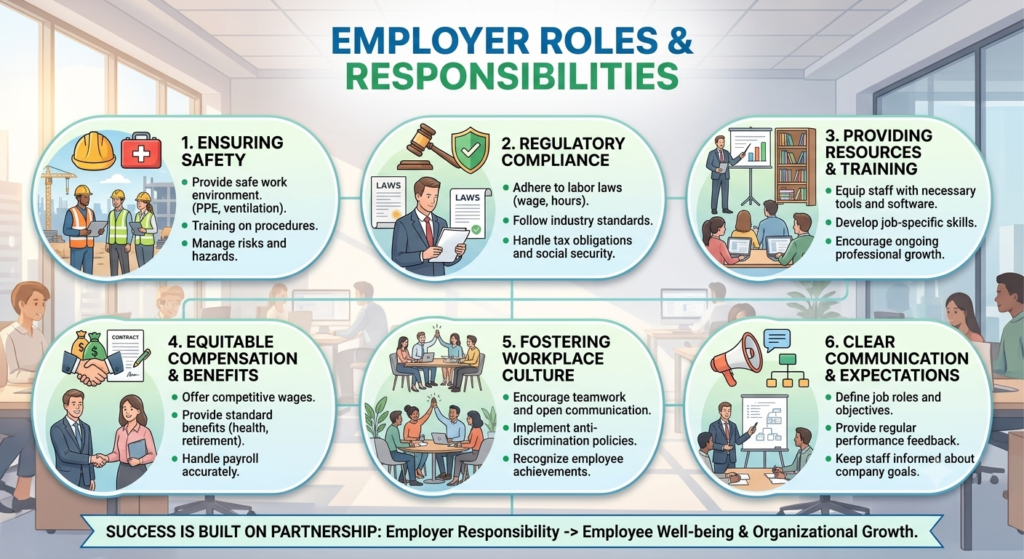
Employer Rights & Responsibilities C155 Art. 16, 17, 18
- Keep workplaces, machinery, equipment, and work processes safe “so far as is reasonably practicable.”
- Make sure chemical, physical, and biological substances under their control don’t pose a health risk.
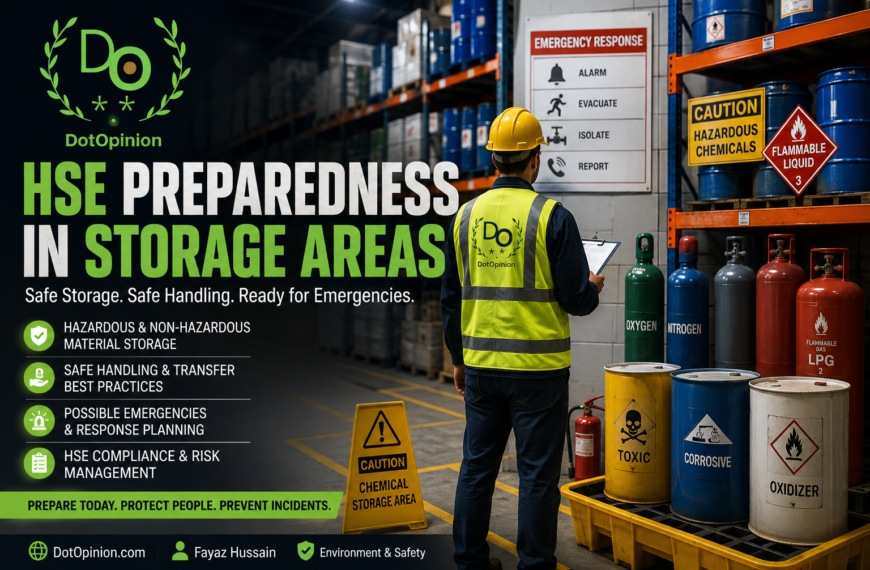
- Provide protective clothing and protective equipment free of charge, wherever it’s needed.
- Set up emergency and first-aid arrangements for accidents (Article 18).
- Coordinate with other employers when two or more companies share one workplace (Article 17) — no passing the buck to “the other contractor.”
- Never make workers pay for safety measures out of their own pocket (Article 21).
Employer Rights & Responsibilities
- The right to expect reasonable cooperation from workers on safety procedures.
- The right to set and enforce site safety rules, provided they meet or exceed national OSH law.
- The right to bring in outside technical advisers for OSH matters, by mutual agreement.
R164 adds more texture: it encourages employers to set up joint safety and health committees or appoint worker safety delegates (Paragraph 12), give them real information (not just a poster on the wall), and actually consult them before rolling out major new safety measures.
Employee Duties — Rights & Responsibilities (RNR)
Article 19 is where the ILO turns to workers. It’s often misread as “workers just have to obey” — but it’s actually a two-way deal. Workers get real rights here too, most famously the right to refuse dangerous work.
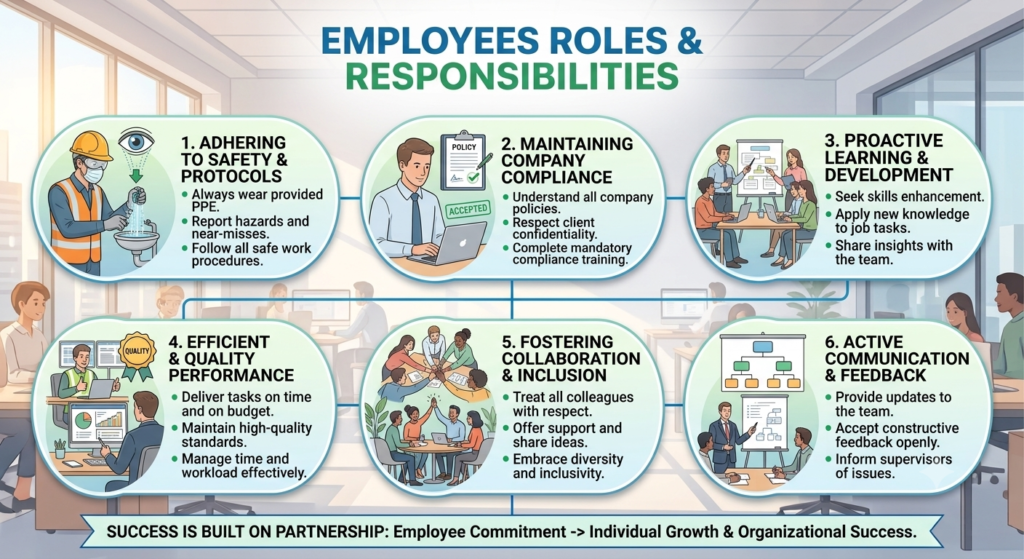
Employee Rights & Responsibilities C155 Art. 19 · R164 Para. 16
- Cooperate with the employer so the employer can actually meet its own safety obligations.
- Take reasonable care of their own safety and health, and that of anyone else who might be affected by what they do (or don’t do).
- Comply with safety instructions and standard operating procedures.
- Report immediately to a supervisor any situation they reasonably believe could be dangerous.
- Report any accident or injury connected with work, no matter how small it seems.
Employee Rights & Responsibilities C155 Art. 19(e)–(f), 20
- The right to be given proper training in occupational safety and health.
- The right, through representatives, to be consulted on all OSH aspects of their work — and to bring in outside technical advisers if needed.
- The single biggest one: the right to remove themselves from a work situation they reasonably believe presents “imminent and serious danger” to life or health — and to be protected from any punishment for doing so.
- Protection from disciplinary action for properly raising safety concerns.
The core deal, in one line: employer duties under Articles 16–18 have to be met first — a worker’s duty to “cooperate” under Article 19 only makes sense once the employer has actually given them something safe to cooperate with.
Cooperation Loop — How the Two Sides Connect (Article 20)
EMPLOYER Safe systems, PPE, training, first aid (Art.16–18) EMPLOYEE Cooperation, care, reporting (Art.19 / R164 Para.16) provides safe conditions reports hazards & cooperates Article 20 — Cooperation between management and workers is essential Fig. 1 — The safety duty runs both ways: employers build the safe system first, workers keep it running honestly.
Why This Isn’t Just Paperwork: The Global Numbers
It’s easy to treat all this article-and-paragraph stuff as legal trivia, until you look at what happens without it. The ILO’s own global estimates are sobering: around 2.93 million workers died from work-related factors in 2019, with 2.6 million of those deaths (89 per cent) attributed to occupational diseases and 330,000 (11 per cent) to occupational accidents. On top of that, over 395 million workers worldwide suffered a non-fatal occupational injury that same year. Work-related deaths made up 6.71 per cent of all global deaths in 2019 — that’s a bigger share than road traffic deaths.
| Metric | Figure |
|---|---|
| Total work-related deaths | ≈ 2.93 million / year |
| — from occupational diseases | ≈ 2.6 million (89%) |
| — from occupational accidents | ≈ 330,000 (11%) |
| Non-fatal occupational injuries | ≈ 395 million / year |
| Share of all global deaths | 6.71% |
| Hardest-hit region | Asia and the Pacific — about 63% of the global total |
| Riskiest sectors | Agriculture, construction, forestry, fishing, and manufacturing — roughly 200,000 fatal injuries, or 63% of all fatal injuries |
Fig. 2 — Composition of ~2.93M Global Work-Related Deaths (2019) Occupational diseases — 2.6M (89%) Occupational accidents — 330K (11%) Every day, this works out to roughly 8,000 deaths — about 1,000 from accidents and 7,000 from work-related disease. Source: WHO/ILO Joint Estimates & ILOSTAT, 2019 data.By 2030, the ILO projects more than 2% of total global working hours will be lost annually to heat stress alone — equivalent to over 80 million full-time jobs
, hitting outdoor and manual workers hardest. Climate-linked hazards are exactly the kind of “evolving risk” C155’s national-policy reviews (Article 7) are meant to keep catching.
Fire Safety: Still the Classic Emergency
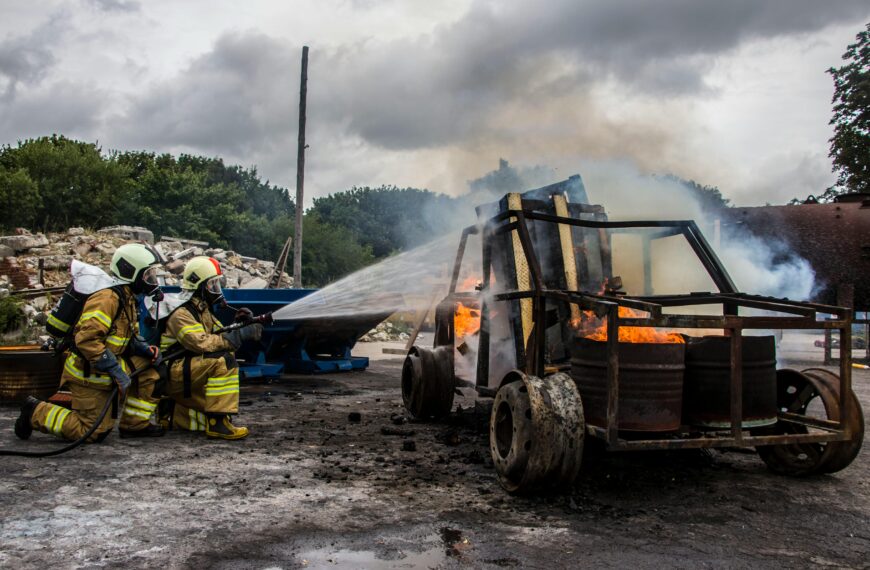
Fires remain one of the most serious workplace hazards, and they fall squarely under the emergency-preparedness duties in Article 18. Every workplace should have marked exits, working alarms, extinguishers within reach, a clear assembly point, and trained fire wardens. Regular drills matter — knowing the plan on paper isn’t the same as knowing it under pressure. Something as small as a blocked exit or an overloaded socket can turn into a disaster, which is exactly why fire prep sits under both employer and employee roles and responsibilities, not just management’s.
PPE & Training: The Practical Layer
Personal Protective Equipment is the last line of defence, not the first. Article 16 obliges employers to supply it free of charge whenever it’s needed — helmets, eye protection, gloves, hearing protection, respirators, safety footwear, fall protection. But PPE should never replace fixing the hazard at its source. Training is the other half: R164 pushes for regular sessions on fire safety, hazard communication, evacuation, PPE use, first aid, manual handling, and electrical safety, with refreshers so the knowledge doesn’t quietly go stale.
Building an Actual Safety Culture
None of this works as a one-off memo. It needs leadership that treats safety as a real priority, workers who actually engage instead of tuning it out, and regular review — which is literally built into C155 (Article 7 requires periodic review of the national OSH situation). When both sides understand their own roles and responsibilities and treat safety as routine rather than an afterthought, workplaces end up healthier, more productive, and better prepared when something does go wrong.
Final Thoughts
Strip away the article numbers and paragraph references, and C155 and R164 boil down to one idea: safety is a shared job, and the ILO wrote down exactly who does which part of it. Employers build the safe system and pay for it. Employees run it honestly and speak up when something’s wrong. Neither side gets to opt out, and neither side’s duties make sense without the other’s. Every worker deserves to go home at the end of a shift — these instruments are the ILO’s attempt to make sure that’s not left to luck.
Keywords:roles and responsibilities, ILO Convention 155, Recommendation 164, occupational safety and health, employer duties, employee duties, workplace safety, PPE, fire safety, safety culture, safety training, accident reporting
Read More about:

 By
By