
Table of Contents
Introduction
Pests have coexisted with human civilization since the dawn of agriculture, quietly shaping the course of history through famine, disease, and economic loss. From the locust swarms that devastated ancient Egyptian harvests to the rats that carried the bubonic plague across medieval Europe, the struggle between humans and pests is as old as settled society itself. Today, pest control remains an essential discipline that safeguards public health, protects agricultural productivity, and preserves the structural integrity of homes and businesses. It encompasses a wide range of practices, technologies, and philosophies aimed at managing organisms that threaten human interests—whether they are insects destroying crops, rodents contaminating food supplies, or microorganisms causing disease.
Pest control is far more than the simple act of spraying insecticide or setting a mousetrap. It is a multidisciplinary field drawing on entomology, ecology, chemistry, engineering, and public policy. Modern pest control must balance effectiveness with environmental responsibility, recognizing that indiscriminate use of chemical pesticides can cause as much harm as the pests themselves. This essay explores the nature of pests, the historical evolution of pest control practices, the diverse methods employed today, the sector-specific applications of pest management, the environmental and health considerations that shape modern policy, and the technological innovations that are redefining how humanity confronts these persistent adversaries. Ultimately, it argues that sustainable, integrated approaches—rather than reliance on any single method—offer the most effective and responsible path forward.
Understanding Pests
A pest, in the broadest sense, is any organism that has a detrimental effect on human activities, health, or economic interests. This definition is inherently anthropocentric: an organism is not inherently “bad” in an ecological sense, but becomes a pest when its presence conflicts with human goals. A cockroach in the wild rainforest is simply part of the ecosystem; the same cockroach in a restaurant kitchen becomes a serious problem.
Pests can be broadly classified into several categories. Insects represent the largest and most diverse group, including mosquitoes, termites, cockroaches, bed bugs, aphids, and locusts. These organisms cause damage ranging from structural destruction of wooden buildings to the transmission of deadly diseases such as malaria, dengue fever, and Lyme disease. Rodents, including rats and mice, constitute another major category; they contaminate food supplies, gnaw through electrical wiring (posing fire hazards), and serve as vectors for diseases like leptospirosis and hantavirus. Birds, particularly pigeons and starlings in urban environments, can damage property with their droppings and nesting habits, while also posing risks to aviation safety. Weeds compete with agricultural crops for nutrients, water, and sunlight, significantly reducing yields if left unmanaged. Fungi and plant pathogens, such as blight and rust, can devastate entire harvests, as tragically demonstrated by the Irish Potato Famine of the 1840s. Finally, microorganisms, including certain bacteria and viruses, are sometimes classified within the broader pest management framework when they affect stored food products or livestock.
The economic impact of pests is staggering. The Food and Agriculture Organization estimates that pests destroy a substantial percentage of global crop production annually, threatening food security in both developed and developing nations. Beyond agriculture, structural pests cause billions of dollars in property damage each year, while disease-carrying pests contribute to the global burden of vector-borne illnesses, which affect hundreds of millions of people worldwide. These staggering figures underscore why pest control is not merely a matter of convenience but a critical component of economic stability and public health infrastructure.
Historical Development of Pest Control
The history of pest control mirrors the broader history of human technological and scientific advancement. In ancient times, early agricultural societies relied on rudimentary methods to protect their crops and stores. Ancient Sumerians used sulfur compounds to control insects as early as 2500 BCE, while ancient Chinese farmers employed predatory ants to protect citrus orchards from pests—an early, if unintentional, form of biological control. The Egyptians used cats to control rodent populations in granaries, a practice so effective and culturally significant that cats became venerated animals in Egyptian society.
Throughout the medieval and early modern periods, pest control remained largely empirical and localized, relying on traditional knowledge passed down through generations. Farmers used crop rotation, companion planting, and physical barriers to reduce pest damage. However, these methods, while sustainable, often proved insufficient against large-scale infestations or epidemics, as evidenced by the devastating locust plagues and rodent-borne pandemics that periodically swept through populations.
The nineteenth and twentieth centuries ushered in what might be called the chemical revolution in pest control. The discovery of synthetic pesticides transformed agriculture and public health. Compounds such as Paris Green and lead arsenate were among the first synthetic pesticides used on a large scale, though their toxicity to humans and the environment would later become apparent. The most significant breakthrough came with the development of DDT (dichlorodiphenyltrichloroethane) in the 1940s. Hailed as a miracle chemical, DDT proved remarkably effective against disease-carrying mosquitoes and agricultural pests, contributing to dramatic declines in malaria cases and substantial increases in crop yields. Paul Hermann Müller, who discovered its insecticidal properties, was awarded the Nobel Prize in Physiology or Medicine in 1948.
However, the widespread and often indiscriminate use of DDT and similar organochlorine pesticides eventually revealed severe environmental consequences. Rachel Carson’s 1962 book “Silent Spring” brought public attention to the devastating effects of pesticide accumulation in the food chain, particularly its impact on bird populations through eggshell thinning. This landmark publication is widely credited with catalyzing the modern environmental movement and prompting a fundamental reevaluation of pest control practices. In subsequent decades, many countries banned or severely restricted DDT and similar persistent organic pollutants, leading to the development of more targeted, less environmentally persistent chemical alternatives.
This environmental reckoning gave rise to Integrated Pest Management (IPM), a philosophy that emerged in the 1960s and 1970s and continues to shape pest control practices today. IPM represented a paradigm shift away from reliance on chemical pesticides alone toward a holistic, ecosystem-based approach that combines multiple strategies to manage pest populations sustainably while minimizing risks to human health and the environment.
Methods of Pest Control
Contemporary pest control encompasses a diverse toolkit of methods, each with distinct advantages, limitations, and appropriate applications.
Chemical control remains one of the most widely used approaches, involving the application of pesticides, herbicides, fungicides, and rodenticides to eliminate or repel target organisms. Modern chemical pesticides are generally more targeted and less persistent than their predecessors, with categories including organophosphates, pyrethroids, and neonicotinoids, each designed to affect specific biological pathways in target pests while theoretically minimizing harm to non-target species. Chemical control offers rapid results and can be highly effective for severe infestations, but it carries risks including pesticide resistance, non-target toxicity, and environmental contamination.
Biological control harnesses natural predator-prey relationships, parasitism, or pathogenic interactions to manage pest populations. This includes the introduction of natural predators (such as ladybugs to control aphid populations), parasitoids (wasps that lay eggs in host insects), and microbial agents (such as Bacillus thuringiensis, a bacterium toxic to specific insect larvae but harmless to humans). Biological control offers the advantage of sustainability and reduced chemical dependency, though it requires careful implementation to avoid introducing invasive species that could themselves become problematic.
Mechanical and physical control methods rely on direct physical intervention rather than chemical or biological agents. This category includes traps, barriers, screens, and manual removal techniques. Rodent traps, insect light traps, and physical exclusion methods (such as sealing entry points in buildings) fall under this category. These methods are particularly valuable in situations where chemical use is restricted, such as food processing facilities or homes with young children and pets.
Cultural control involves modifying agricultural or environmental practices to make conditions less favorable for pest establishment and proliferation. Crop rotation disrupts pest life cycles that depend on specific host plants, while proper sanitation reduces food and shelter availability for pests like rodents and cockroaches. Timing of planting and harvesting can also be adjusted to avoid peak pest activity periods.
Genetic and technological methods represent the cutting edge of pest control science. The sterile insect technique, which involves releasing sterilized male insects to reduce pest reproduction rates, has proven remarkably successful in controlling agricultural pests like the Mediterranean fruit fly. More recently, genetic modification and gene-drive technologies offer the potential to suppress or modify pest populations at the genetic level, though these approaches raise significant ethical and ecological questions that remain subjects of ongoing scientific and public debate.
Integrated Pest Management (IPM) synthesizes these various approaches into a coherent, context-specific strategy. Rather than relying on any single method, IPM practitioners assess pest populations, establish economic or health-based action thresholds, and select the most appropriate combination of chemical, biological, mechanical, and cultural controls. This approach emphasizes prevention, monitoring, and minimal intervention, using chemical pesticides only when necessary and as a last resort rather than a first response.
Pest Control in Different Sectors

Pest control practices vary considerably depending on the sector and context in which they are applied.
In agriculture, pest control is fundamental to ensuring food security and economic viability for farmers. Agricultural pest management must balance effectiveness with cost considerations, given the tight profit margins many farmers operate under, as well as environmental sustainability, since agricultural land often borders sensitive ecosystems. Precision agriculture technologies now allow farmers to apply pesticides only where and when needed, reducing overall chemical usage while maintaining crop protection. Additionally, the growing organic farming movement has spurred renewed interest in non-chemical pest management strategies, including companion planting and beneficial insect habitats.
Residential and urban pest control addresses the pests that most directly affect everyday quality of life: cockroaches, bed bugs, ants, termites, and rodents. This sector emphasizes prevention through sanitation and exclusion, combined with targeted treatment when infestations occur. The pest control industry has developed specialized expertise in addressing structural pests like termites, which cause billions of dollars in property damage annually by compromising wooden building components. Urban environments also present unique challenges, as dense populations of both humans and pests create conditions conducive to rapid infestation spread.
Public health and vector control represents perhaps the highest-stakes application of pest control science, given its direct connection to human mortality and morbidity. Mosquito control programs target vectors for diseases including malaria, dengue fever, Zika virus, and West Nile virus, employing methods ranging from larvicide application in standing water to community education about eliminating breeding sites. Vector control programs must be sustained and well-funded, as interruptions can lead to disease resurgence, as has been observed in various malaria-endemic regions when control programs lost funding or political support.
Industrial and commercial pest management encompasses food processing facilities, warehouses, restaurants, and healthcare institutions, where pest infestations can have severe regulatory, financial, and reputational consequences. These sectors typically operate under strict regulatory oversight, requiring documented pest management plans, regular inspections, and rapid response protocols. The stakes are particularly high in food-related industries, where pest contamination can trigger product recalls, facility closures, and significant public health investigations.
Environmental and Health Considerations
The environmental and health implications of pest control practices have become increasingly central to policy discussions and industry standards. Chemical pesticide overuse poses risks including groundwater contamination, soil degradation, and harm to beneficial organisms such as pollinators. The well-documented decline in bee populations across North America and Europe has been linked, at least in part, to neonicotinoid pesticide exposure, prompting regulatory restrictions in several jurisdictions and intense scientific debate about the broader ecological costs of chemical pest control.
Non-target effects represent another significant concern. Pesticides designed to kill specific pest species can inadvertently harm beneficial insects, birds, aquatic organisms, and other wildlife, disrupting ecosystem balance in ways that may not become apparent until years after initial application. Biomagnification—the process by which certain persistent chemicals accumulate in increasing concentrations up the food chain—can result in top predators, including humans, being exposed to concentrated levels of harmful substances originally applied in far smaller quantities.
Pesticide resistance presents an evolutionary challenge that mirrors antibiotic resistance in medicine. When pest populations are repeatedly exposed to the same chemical agents, natural selection favors individuals with genetic traits conferring resistance, gradually rendering previously effective pesticides useless. This phenomenon has been documented across numerous pest species, from mosquitoes resistant to common insecticides to weeds resistant to widely used herbicides like glyphosate. Resistance management requires rotating chemical classes, combining control methods, and maintaining pest population refuges to slow the evolutionary process.
In response to these challenges, regulatory frameworks have evolved considerably. Agencies such as the United States Environmental Protection Agency, the World Health Organization, and the Food and Agriculture Organization establish safety standards, conduct risk assessments, and approve or restrict pesticide use based on scientific evidence. These regulatory bodies require extensive testing before new pesticides can be approved, evaluating potential impacts on human health, wildlife, and environmental quality. International agreements, such as the Stockholm Convention on Persistent Organic Pollutants, have facilitated coordinated global action against particularly harmful chemical classes.
Modern Innovations in Pest Control
The pest control industry is undergoing a technological transformation driven by advances in sensing, data analytics, and biotechnology. Smart traps equipped with sensors and connectivity capabilities can now detect pest presence in real time, alerting pest management professionals before infestations become severe. These devices reduce the need for routine chemical applications by enabling targeted intervention precisely when and where needed.
Drones and precision agriculture technologies are revolutionizing large-scale pest management. Agricultural drones equipped with multispectral cameras can identify early signs of pest damage or disease across vast farmland areas, enabling farmers to address problems before they spread. Precision spraying systems, guided by GPS and real-time field data, apply pesticides only to affected areas rather than entire fields, dramatically reducing overall chemical usage.
Biopesticides derived from naturally occurring substances, including plant extracts, beneficial microorganisms, and pheromones, offer environmentally friendly alternatives to synthetic chemicals. Pheromone-based traps and mating disruption techniques exploit insect communication systems to reduce reproduction rates without introducing toxic substances into the environment. RNA interference technology represents a particularly promising frontier, offering the potential to develop highly species-specific pest control agents that silence critical genes in target pests while leaving non-target organisms completely unaffected.
Data-driven pest forecasting models, powered by machine learning and historical infestation data, now allow pest management professionals and farmers to anticipate pest outbreaks before they occur, factoring in variables such as weather patterns, seasonal trends, and regional pest population data. This predictive capability enables proactive rather than reactive pest management, potentially reducing both economic losses and chemical usage.
Challenges and Future Directions
Despite significant advances, pest control continues to face substantial challenges. Climate change is altering pest distribution patterns, extending the geographic range of many pest species into previously unaffected regions and altering the timing of pest life cycles in ways that complicate traditional management strategies. Warmer temperatures have enabled disease-carrying mosquitoes to expand into higher latitudes and altitudes, while shifting precipitation patterns affect the prevalence of various agricultural pests.
The push toward sustainable and eco-friendly pest control practices continues to gain momentum, driven by consumer demand, regulatory pressure, and growing scientific understanding of ecological interconnectedness. This shift favors approaches that minimize environmental disruption while maintaining effective pest management, including expanded use of biological controls, precision application technologies, and IPM frameworks.
Public education and community-based pest management represent increasingly recognized components of effective long-term pest control strategy. Individual and community-level actions, such as proper waste management, elimination of standing water, and building maintenance, can significantly reduce pest populations without requiring extensive chemical intervention. Public health campaigns that engage community members as active participants in vector control, rather than passive recipients of pest management services, have shown particular promise in sustainable disease prevention efforts.
Why Pest Control Matters in Everyday Life

Beyond the large-scale agricultural and public health frameworks discussed above, pest control has a direct and tangible impact on daily life that deserves closer examination. Understanding why pest control matters at the individual and household level helps explain why it remains a consistent priority for homeowners, businesses, and communities alike.
Restoring the beauty and value of properties. Pest infestations rarely remain invisible for long. Termites hollow out wooden beams and furniture, carpenter ants tunnel through structural supports, and rodents gnaw through walls, insulation, and wiring, leaving behind unsightly damage that diminishes a property’s visual appeal and market value. Ant trails across kitchen counters, cobwebs in corners, and droppings along baseboards all detract from the impression of a well-kept home or business. Regular pest control not only eliminates active infestations but also repairs the conditions that allow a property to look and feel cared for. For real estate owners in particular, a documented pest-free status is often essential to preserving resale value, since visible infestation or structural pest damage can significantly lower a buyer’s willingness to pay, or trigger costly remediation demands during inspection.
Maintaining food hygiene. Few areas of pest control carry higher stakes than food safety. Cockroaches, flies, ants, and rodents are all capable of contaminating food and food-preparation surfaces with bacteria such as Salmonella and E. coli, simply by walking across them. In restaurants, food processing plants, and household kitchens alike, even a small pest presence can compromise entire batches of stored food, leading to spoilage, economic loss, and, in more serious cases, foodborne illness outbreaks. This is why food-handling establishments are typically held to strict, legally mandated pest control standards, with routine inspections designed to catch early signs of infestation before contamination occurs. At the household level, consistent pest control—paired with proper food storage—remains one of the simplest and most effective ways to protect a family’s health.
Supporting general cleanliness. Pest control and cleanliness are deeply interconnected, each reinforcing the other. Pests are drawn to environments that offer food scraps, moisture, and clutter, meaning that poor sanitation often invites infestation, while an existing infestation can in turn make a space feel and become dirtier through droppings, shed skins, nesting debris, and odors. A consistent pest control routine, combined with good housekeeping practices such as regular waste disposal, sealing food containers, and reducing clutter, creates a reinforcing cycle in which cleanliness discourages pests and pest control helps preserve cleanliness. This relationship is particularly important in shared or high-traffic environments, including apartment buildings, schools, and hospitals, where a single unmanaged infestation can quickly spread to neighboring units or rooms.
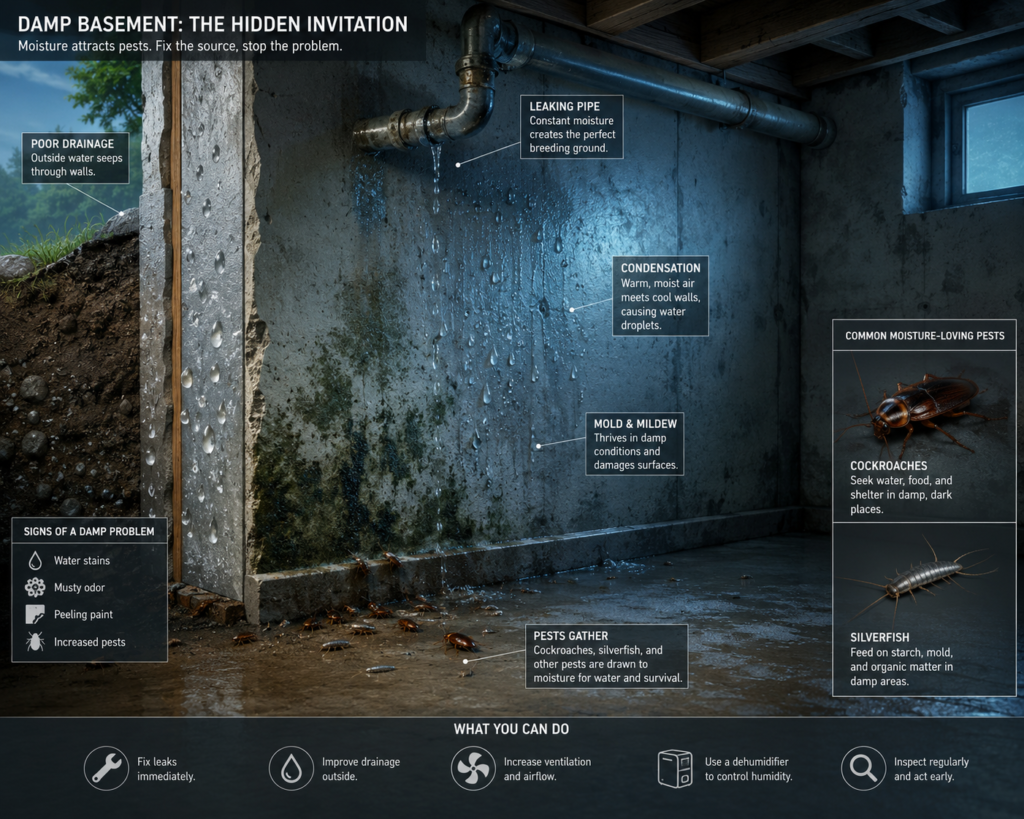
Managing humidity-related pest problems. Moisture and humidity are among the most significant environmental drivers of pest activity. Cockroaches, silverfish, termites, and certain mold-associated mites all thrive in damp conditions, making bathrooms, basements, kitchens, and poorly ventilated storage areas particularly vulnerable to infestation. Leaking pipes, condensation, and inadequate drainage can quietly create the exact conditions many pests need to establish and multiply. Effective pest control therefore often begins with humidity management: fixing leaks, improving ventilation, using dehumidifiers, and ensuring proper drainage around a building’s foundation. Addressing humidity is frequently more effective at preventing long-term reinfestation than chemical treatment alone, since it removes the underlying condition that continually attracts pests back to the same location.
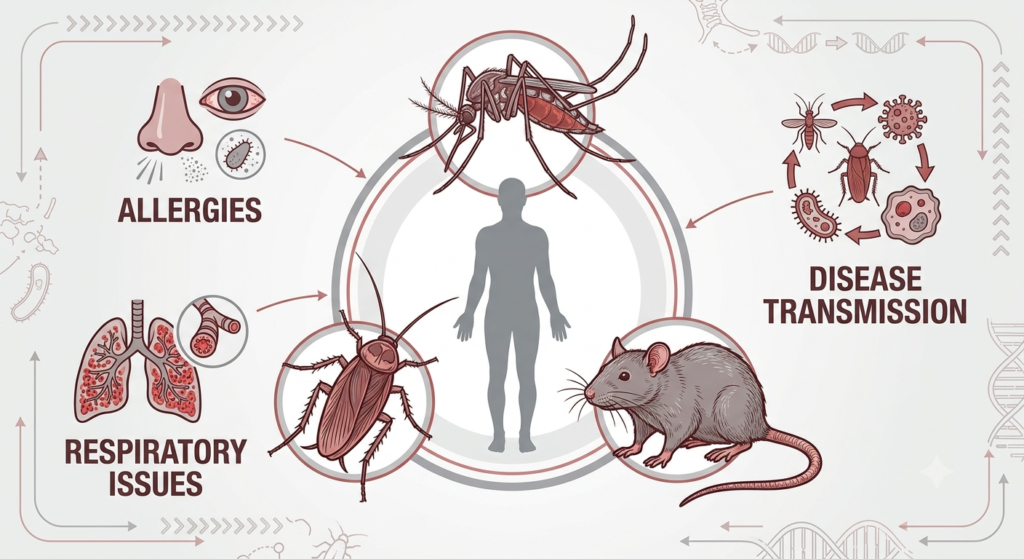
Health impacts of pests. The health consequences of unmanaged pest populations extend well beyond simple nuisance. Mosquitoes remain among the most dangerous disease vectors in the world, transmitting malaria, dengue fever, chikungunya, and other illnesses that affect hundreds of millions of people annually. Cockroaches and dust mites are well-documented triggers for asthma and allergic reactions, particularly in children, due to allergens present in their shed skin and droppings. Rodents can spread diseases such as leptospirosis, hantavirus, and salmonellosis, either through direct contact or contamination of food and water sources. Bed bugs, while not typically disease vectors, cause significant physical discomfort, skin reactions, and psychological distress, including anxiety and sleep disturbance, in affected households. Given this wide range of health risks, pest control functions as a form of preventive healthcare, reducing the likelihood of exposure to pathogens and allergens before they ever reach a person.
Key considerations before acquiring pest control services. Before hiring a pest control provider or purchasing pest control products, several factors deserve careful thought. First, accurate pest identification is essential, since treatments effective against one pest species may be entirely ineffective—or even counterproductive—against another. Second, the extent of the infestation should be assessed, as minor pest presence may respond well to targeted or do-it-yourself methods, while extensive infestations typically require professional intervention. Third, safety considerations matter greatly, particularly in households with children, elderly residents, pets, or individuals with respiratory sensitivities, who may be more vulnerable to certain chemical treatments. Fourth, it is worth verifying that any hired provider is properly licensed and insured, and that the products used are approved by relevant regulatory authorities. Fifth, cost and treatment frequency should be clarified upfront, since some pest problems, such as termite or bed bug infestations, may require multiple visits or long-term monitoring contracts rather than a single treatment. Finally, environmentally conscious consumers may wish to ask about the availability of low-toxicity, biological, or IPM-based treatment options rather than defaulting to broad-spectrum chemical applications.
Pest control versus rodent control. Although rodent control is often discussed as a subset of general pest control, the two are not identical, and the distinction matters in practice. General pest control typically targets insects such as cockroaches, ants, termites, mosquitoes, and bed bugs, using methods like insecticide sprays, baits, and physical exclusion suited to their biology and behavior. Rodent control, by contrast, addresses mammals—primarily rats and mice—whose intelligence, mobility, and reproductive rates require a distinct set of strategies, including snap traps, live traps, rodenticide bait stations, and structural exclusion measures such as sealing gaps larger than a quarter-inch. Rodents also pose unique risks, including gnawing damage to electrical wiring that can create fire hazards, that are not typically associated with insect pests. Because of these differences, many professional pest control programs treat rodent control as a specialized service line, often requiring separate inspection protocols, equipment, and follow-up schedules from standard insect-focused pest management, even though both fall under the broader pest control umbrella and are frequently bundled together for comprehensive property protection.
What a standard pest control activity should include.
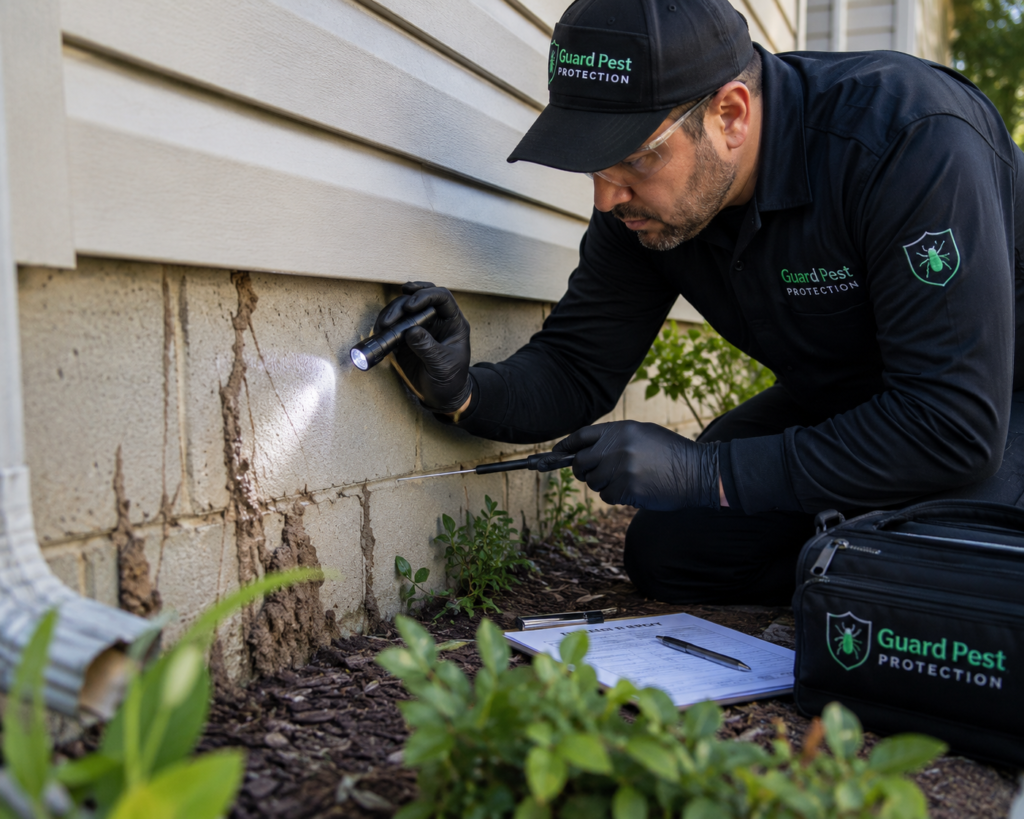
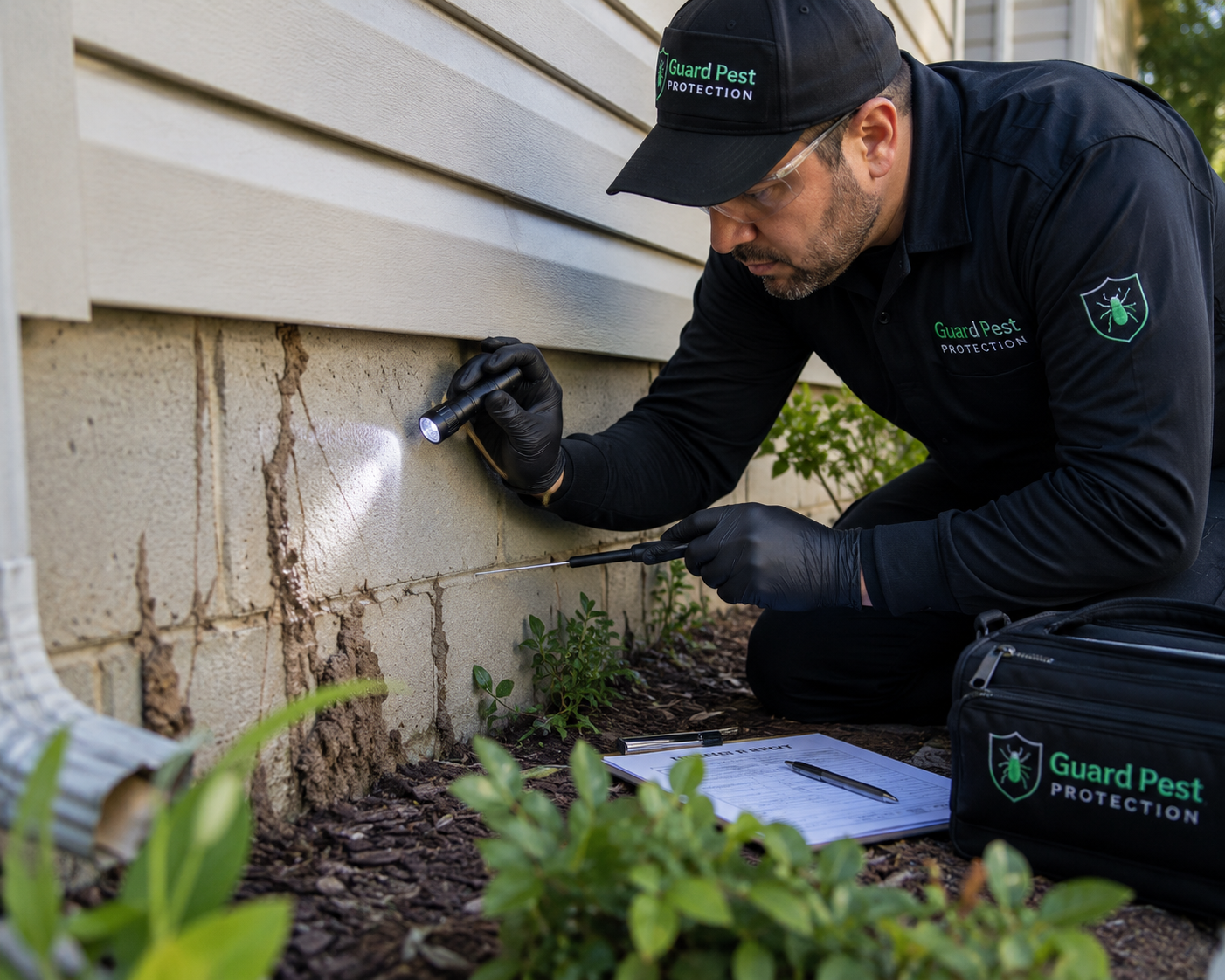
A properly conducted pest control service, whether performed by a professional or undertaken by a knowledgeable property owner, should generally follow a structured sequence. It begins with a thorough inspection to identify the specific pest species present, the extent of the infestation, and the environmental conditions contributing to it, such as moisture sources, entry points, or food access. This is followed by the development of a targeted treatment plan appropriate to the identified pest, which may combine chemical, mechanical, and cultural control methods rather than relying on a single approach. Treatment application should prioritize precision, targeting known harborage areas, entry points, and activity zones rather than broadly dispersing chemicals throughout a space. Preventive measures, including sealing cracks and gaps, repairing moisture issues, and improving sanitation, should be addressed alongside active treatment to reduce the likelihood of reinfestation. Clear communication with the property owner or occupants regarding safety precautions, re-entry times after chemical application, and expected results is essential. Finally, a standard pest control activity should include a follow-up or monitoring component, since many infestations—particularly termites, bed bugs, and rodents—require repeat visits to confirm that the treatment has been fully effective and to catch any resurgence early. Documentation of the inspection findings, products used, and treatment dates further supports accountability and is often required for regulatory compliance in commercial and food-handling settings.
Conclusion
Pest control stands at the intersection of science, economics, public health, and environmental stewardship. From ancient agricultural societies employing rudimentary protective measures to the sophisticated, technology-driven approaches of the twenty-first century, humanity’s relationship with pests has continuously evolved alongside scientific understanding and technological capability. The chemical revolution of the twentieth century demonstrated both the tremendous potential and significant risks of powerful pesticide technologies, ultimately giving rise to more balanced, integrated approaches that recognize the interconnected nature of ecological systems.
Modern pest control increasingly emphasizes prevention, precision, and sustainability over reliance on any single control method. Integrated Pest Management, combined with emerging technologies such as smart sensors, precision agriculture tools, and targeted biopesticides, offers a path toward effective pest management that minimizes collateral environmental and health damage. However, ongoing challenges, including pesticide resistance, climate-driven shifts in pest distribution, and the need for continued regulatory vigilance, ensure that pest control will remain a dynamic and evolving field.
Ultimately, effective pest control requires recognizing pests not as enemies to be eradicated at any cost, but as ecological actors whose populations must be thoughtfully managed within the broader context of environmental sustainability and public health. As the world confronts growing populations, changing climates, and evolving pest threats, the continued development of sustainable, science-based pest management strategies will remain essential to protecting human health, food security, and the natural ecosystems upon which all life ultimately depends.
Read More About


 By
By