
Introduction
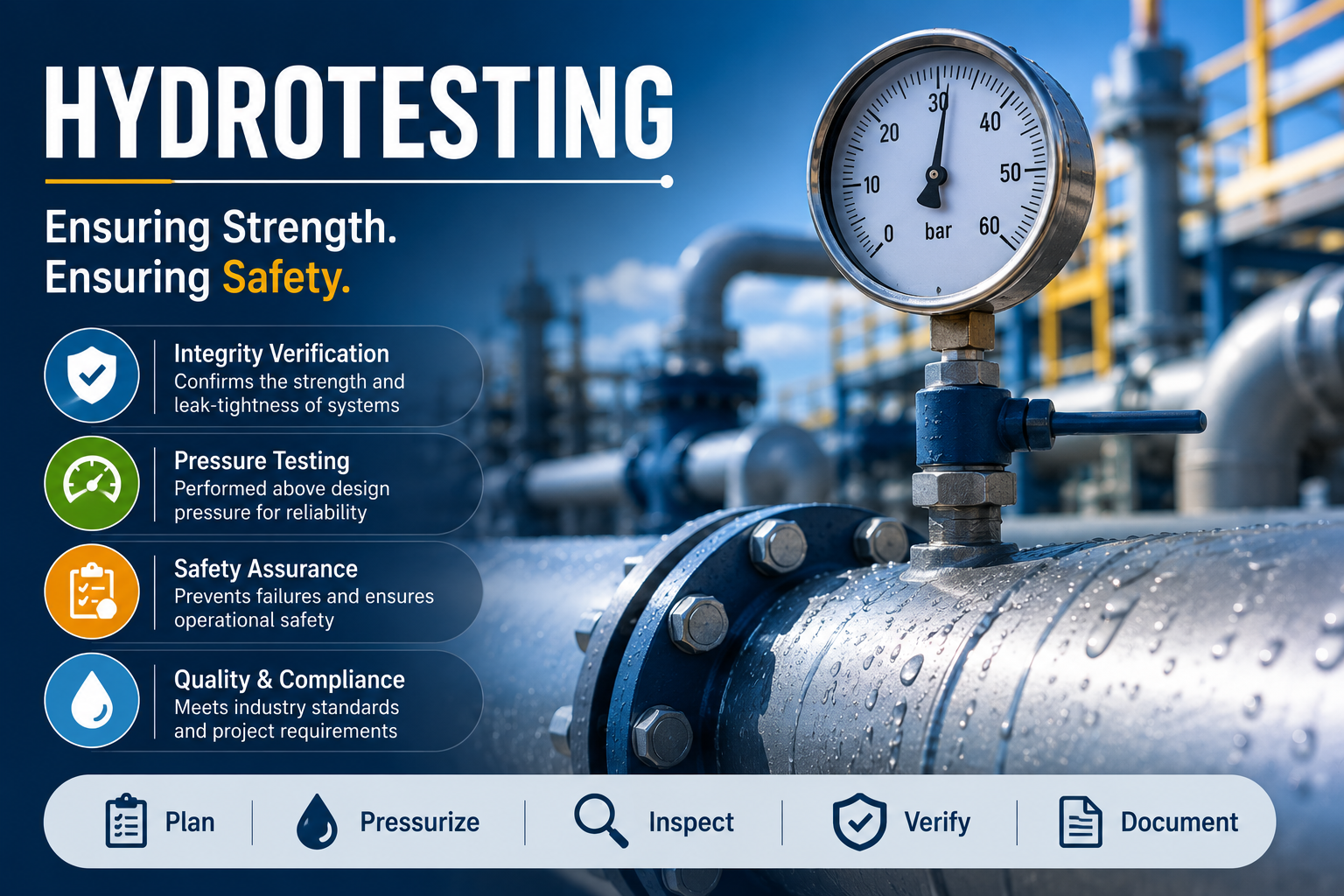
Hydrotesting, also known as hydrostatic testing, is a widely used method for verifying the strength and integrity of pressure-containing equipment such as pipelines, pressure vessels, boilers, and storage tanks. The process involves filling the equipment with water and pressurizing it to a level higher than its normal operating pressure, in order to detect leaks, weaknesses, or defects before the equipment is put into service. While hydrotesting is essential for ensuring mechanical integrity, it is also an activity with significant Health, Safety, and Environment (HSE) implications that must be carefully managed.
Table of Contents
Purpose of Hydrotesting
The primary objective of hydrotesting is to confirm that a system can safely withstand its design pressure without failure. It helps identify:
- Weld defects and material flaws
- Leaks at joints, flanges, and fittings
- Structural weaknesses that could lead to catastrophic failure during operation
Since the test uses water rather than a compressible gas, any sudden failure releases far less stored energy, making it inherently safer than pneumatic testing. This is one of the main reasons hydrotesting is preferred from a safety standpoint.
HSE Hazards Associated with Hydrotesting
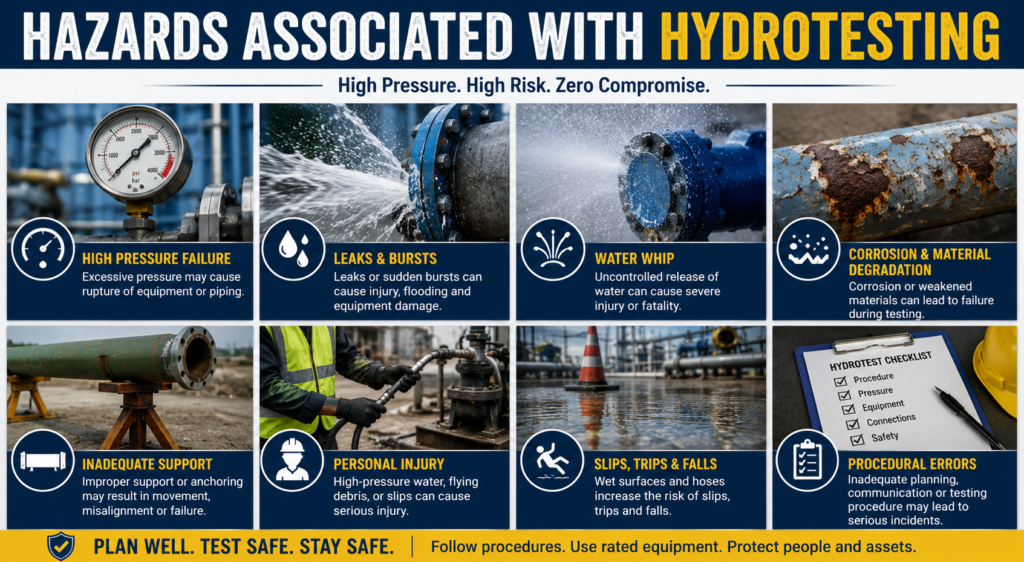
Despite being safer than pneumatic testing, hydrotesting is not without risk. Key hazards include:
- High-Pressure Energy Release – Even with water, sudden failure of fittings, hoses, or test plugs can cause whipping hoses, flying debris, or injury to personnel.
- Structural Failure – Poorly supported piping or vessels may shift or collapse under the added weight of water.
- Manual Handling Injuries – Moving hoses, pumps, and test equipment can cause strains or sprains.
- Confined Space Risks – Draining and inspecting vessels afterward may require confined space entry.
- Environmental Impact – Disposal of large volumes of test water, especially if treated with corrosion inhibitors or biocides, can affect soil and water bodies if not handled properly.
- Water Sourcing Issues – Large-scale hydrotests can strain local water resources, particularly in water-scarce regions.
Safety Precautions
Read more About Safety
To manage these risks, organizations follow strict HSE protocols, including:
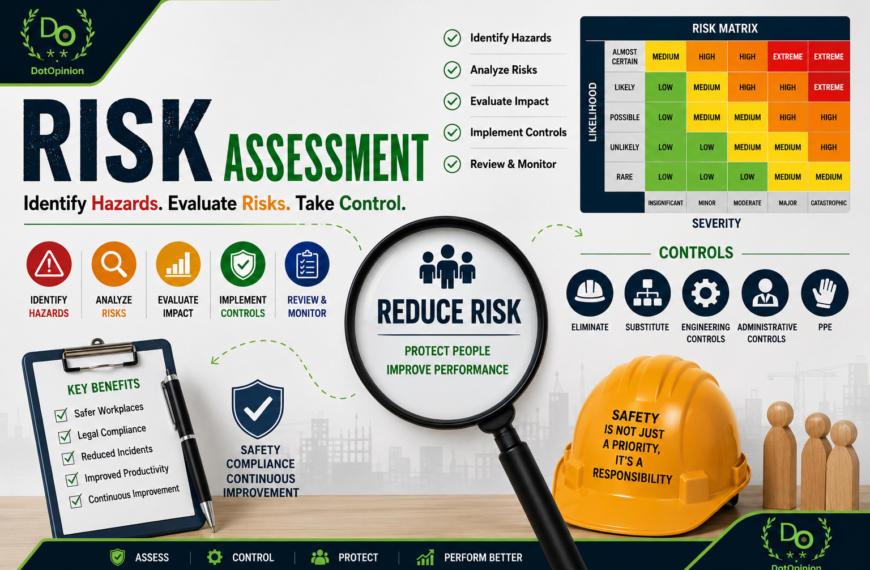
- Risk Assessment and Permit-to-Work: A formal risk assessment and hydrotest-specific permit should be completed before work begins.
- Isolation and Barricading: The test area should be cordoned off, with warning signs and restricted access during pressurization.
- Calibrated Instruments: Pressure gauges and relief devices must be calibrated and functioning correctly.
- Gradual Pressurization: Pressure should be increased in stages, with hold points to check for leaks or abnormal readings.
- Personal Protective Equipment (PPE): Appropriate PPE, including safety glasses, gloves, and hearing protection, should be worn.
- Emergency Preparedness: Personnel should be briefed on emergency shutdown procedures and evacuation routes.
Environmental Considerations
Read more About Environment
From an environmental standpoint, hydrotesting requires careful planning for:
- Water Sourcing: Using treated or non-potable water where possible to reduce impact on drinking water supplies.
- Chemical Additives: Minimizing or selecting environmentally friendly corrosion inhibitors and biocides.
- Water Disposal: Test water must be discharged in compliance with local environmental regulations, often requiring treatment before release, especially if it has contacted hydrocarbons or chemicals.
- Spill Prevention: Proper containment measures should be in place to prevent uncontrolled discharge into soil or waterways.
Conclusion
Hydrotesting plays a vital role in ensuring the safety and reliability of pressure equipment before it enters service. However, its HSE risks—ranging from pressure hazards to environmental impact—must be proactively managed through proper planning, risk assessment, and adherence to established safety procedures. By integrating strong HSE practices into every stage of the hydrotest, organizations can protect their workforce, the environment, and the surrounding community while achieving the technical assurance the test is designed to provide.
Explore more About Hydrotesting
- American Society of Mechanical Engineers (ASME)
- American Petroleum Institute (API)
- National Board of Boiler and Pressure Vessel Inspectors (NBBI)
- Occupational Safety and Health Administration (OSHA)
- International Organization for Standardization (ISO)
- American Water Works Association (AWWA)
- NACE International (now AMPP)
- American Society for Nondestructive Testing (ASNT)
- Engineering Toolbox – Hydrostatic Testing
- Piping Technology & Products
- The Welding Institute (TWI)
- British Standards Institution (BSI)
- DNV
- Bureau Veritas
- Lloyd’s Register

 By
By