
Introduction
Every workplace, regardless of industry, carries some degree of risk. From the paper cut sustained in an office to the chemical splash encountered in a manufacturing plant, injuries and sudden illnesses can and do occur wherever people work. The single most important factor in determining whether a minor incident remains minor — or escalates into a life-threatening emergency — is the immediacy and quality of the response in the first moments after the event. This is the domain of workplace first aid: the initial, temporary care given to an injured or suddenly ill person before professional medical treatment can be obtained.
The Occupational Safety and Health Administration (OSHA), the primary federal agency responsible for ensuring safe and healthful working conditions in the United States, recognizes first aid not as an optional courtesy but as a core pillar of occupational safety. OSHA’s regulations, standards, and guidance documents establish both the legal obligations employers must meet and the practical framework within which effective first aid programs are built. This essay explores, in depth, the regulatory foundation of workplace first aid under OSHA, the specific requirements employers must satisfy, the scope of what constitutes “first aid” as opposed to more advanced medical treatment, the training and staffing obligations tied to different work environments, the equipment and supplies mandated or recommended, and the broader organizational and cultural significance of maintaining a robust first aid program.
The Regulatory Foundation: OSHA’s General Duty Clause and Specific Standards
OSHA’s authority over workplace first aid flows from two main sources. The first is the General Duty Clause of the Occupational Safety and Health Act of 1970, which requires employers to furnish a workplace “free from recognized hazards that are causing or are likely to cause death or serious physical harm.” While this clause does not spell out first aid requirements in granular detail, it establishes the overarching principle that employers bear responsibility for protecting workers, which includes ensuring that adequate first aid response capability exists.
The second, more specific source is found in 29 CFR 1910.151, titled “Medical Services and First Aid,” which applies broadly across general industry. This standard is deliberately concise, consisting of only three main provisions, but its brevity belies its significance. The standard states:
- The employer shall ensure the ready availability of medical personnel for advice and consultation on matters of plant health.
- In the absence of an infirmary, clinic, or hospital in near proximity to the workplace which is used for the treatment of all injured employees, a person or persons shall be adequately trained to render first aid. Adequate first aid supplies shall be readily available.
- Where the eyes or body of any person may be exposed to injurious corrosive materials, suitable facilities for quick drenching or flushing of the eyes and body shall be provided within the work area for immediate emergency use.
At first glance, this standard appears sparse compared to more prescriptive OSHA regulations covering, for example, fall protection or machine guarding. However, OSHA has issued extensive interpretive letters, appendices, and guidance documents over the years that flesh out what compliance with 1910.151 actually requires in practice. Additionally, industry-specific standards — particularly in construction (29 CFR 1926.50) and maritime operations — impose parallel or more detailed first aid obligations.
The Critical Concept of “Near Proximity”
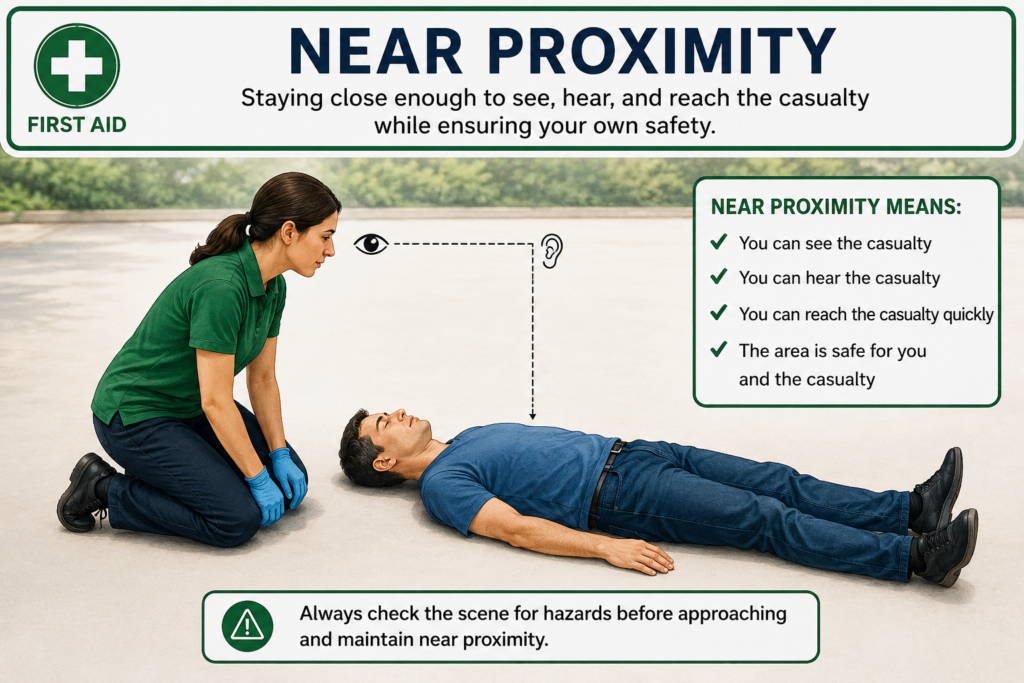
A central and frequently litigated aspect of 1910.151 is the phrase “near proximity” to a hospital, clinic, or infirmary. OSHA has clarified through enforcement letters that this term is not a fixed distance but rather a functional standard based on response time. The generally accepted benchmark, drawn from consensus in the industry and reinforced by OSHA guidance, is that emergency medical services should be able to reach an injured employee within three to four minutes for cases involving life-threatening injuries (such as severe bleeding, absence of breathing, or cardiac arrest), and OSHA has cited employers for failing to have trained first aid responders on-site when professional medical response would take longer than this window.
This means that a facility located next door to a hospital emergency room may satisfy the “near proximity” requirement without needing in-house trained first aid responders, whereas a remote facility — such as a rural agricultural operation, an offshore platform, or a construction site in an undeveloped area — located a significant distance from emergency medical services must have personnel trained and equipped to provide first aid, because reliance on outside responders alone would leave workers vulnerable during the critical minutes following a serious injury.
This is a crucial point that many employers underestimate: simply being near a hospital does not automatically satisfy the standard if traffic patterns, facility layout, or other factors would meaningfully delay a trained responder or ambulance from reaching an injured worker within the necessary window.
Defining First Aid: The OSHA Recordkeeping List
OSHA provides a precise, exhaustive definition of what constitutes “first aid” for recordkeeping purposes under 29 CFR 1904.7(b)(5)(ii). While this list was developed primarily to help employers distinguish recordable from non-recordable injuries (a related but distinct topic from the first aid provision requirements), it is also instructive for understanding the scope of first aid treatment itself. According to OSHA, first aid is limited to the following treatments, and if any of these are the only treatments provided, the injury generally remains classified as first aid:
- Using a non-prescription medication at nonprescription strength (for medications available in both prescription and non-prescription form, a recommendation by a physician or other licensed healthcare professional to use a non-prescription medication at prescription strength is considered medical treatment for recordkeeping purposes)
- Administering tetanus immunizations (other immunizations, such as Hepatitis B vaccine or rabies vaccine, are considered medical treatment)
- Cleaning, flushing, or soaking wounds on the surface of the skin
- Using wound coverings such as bandages, Band-Aids, gauze pads, and the like, or using butterfly bandages or Steri-Strips (other wound closing devices such as sutures or staples are considered medical treatment)
- Using hot or cold therapy
- Using any non-rigid means of support, such as elastic bandages, wraps, non-rigid back belts, and the like (devices with rigid stays or other systems designed to immobilize parts of the body are considered medical treatment)
- Using temporary immobilization devices while transporting an accident victim (splints, slings, neck collars, back boards, and the like)
- Drilling a fingernail or toenail to relieve pressure, or draining fluid from a blister
- Using eye patches
- Removing foreign bodies from the eye using only irrigation or a cotton swab
- Removing splinters or foreign material from areas other than the eye by irrigation, tweezers, cotton swabs, or other simple means
- Using finger guards
- Using massages (physical therapy or chiropractic treatment are considered medical treatment for recordkeeping purposes)
- Drinking fluids for relief of heat stress
This list is deliberately narrow and specific. Any treatment beyond this scope — such as suturing a wound, prescribing prescription-strength medication, administering treatment beyond a single dose of a non-prescription medication for a chronic issue, or providing physical therapy — is classified as medical treatment beyond first aid. Understanding this list is critical not only for accurate injury recordkeeping but also for defining the appropriate scope of what workplace first aid responders are trained and authorized to do.
Training Requirements for First Aid Responders
Although 29 CFR 1910.151 requires that designated personnel be “adequately trained” to render first aid, it does not specify a particular training curriculum, certifying body, or renewal interval. This has led to some ambiguity, which OSHA has addressed through interpretive letters over the years. In general, OSHA considers training programs offered by recognized organizations — such as the American Red Cross, the American Heart Association, the National Safety Council, and others — to satisfy the “adequately trained” requirement, provided the training is current and covers the core competencies needed for the workplace’s specific hazards.
Key elements typically included in a compliant first aid training program include:
- Recognizing an emergency and activating the emergency response system (calling 911 or the appropriate internal emergency notification protocol)
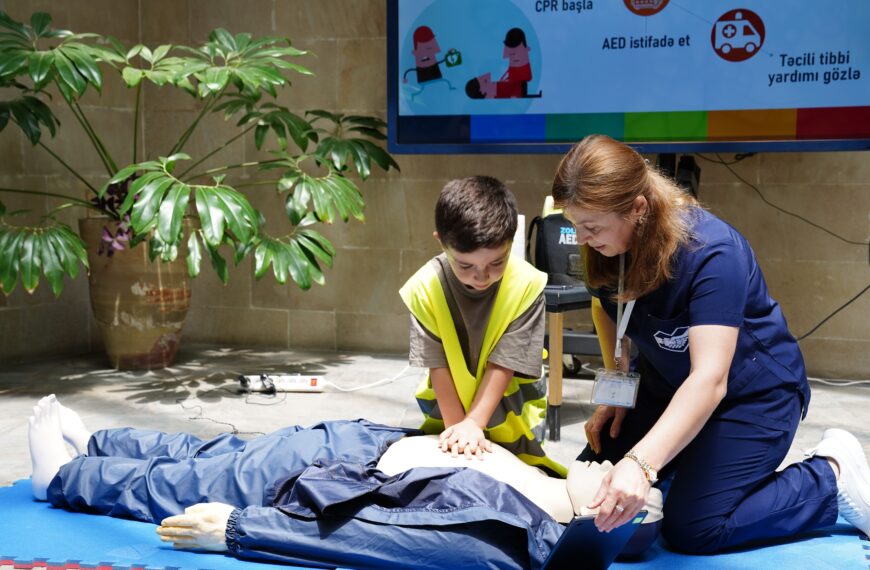
- Basic life support skills, including cardiopulmonary resuscitation (CPR)
- Use of an automated external defibrillator (AED), where available
- Control of bleeding, including the use of direct pressure, wound packing, and, where appropriate, tourniquets
- Treatment of shock
- Management of burns, fractures, and other traumatic injuries
- Recognition and response to choking
- Recognition of signs of heat-related and cold-related illness
- Handling of bloodborne pathogen exposure risks in accordance with 29 CFR 1910.1030 (the Bloodborne Pathogens Standard), since first aid providers are frequently exposed to blood and other potentially infectious materials
It is worth noting that OSHA’s Bloodborne Pathogens Standard intersects significantly with first aid programs. Any employee designated to provide first aid as a collateral duty (in addition to their primary job function) is covered by the Bloodborne Pathogens Standard if they could reasonably anticipate contact with blood or other potentially infectious materials while performing first aid duties. This triggers additional requirements, including offering Hepatitis B vaccination, providing personal protective equipment (such as gloves and eye protection), and following an exposure control plan.
Training frequency is another area where OSHA defers to the standards of recognized certifying organizations, most of which recommend recertification every two years for first aid and CPR, given that skills — particularly CPR technique and confidence — tend to degrade over time without practice or refresher training. Prudent employers build recertification schedules into their safety calendars to ensure that trained responders remain current and confident in their abilities.
Number and Placement of Trained First Aid Providers
Neither 1910.151 nor its construction industry counterpart specifies an exact ratio of trained first aid providers to total employees. However, OSHA’s enforcement history and various consensus guidance documents suggest practical benchmarks that responsible employers commonly apply:
- Every shift and every physically separated work area should have access to at least one trained first aid provider, particularly in workplaces where hazards are present and emergency medical services response time exceeds the three-to-four-minute benchmark for life-threatening injuries.
- Larger facilities, facilities with higher inherent hazard levels (such as those involving heavy machinery, chemical processes, or elevated work), and facilities operating multiple shifts should have a higher density of trained responders to ensure someone is always available and accessible without significant delay.
- Remote or geographically isolated work sites — oil and gas operations, forestry, agriculture, and certain construction projects — often require more robust in-house first aid and even emergency medical technician (EMT) capability, given the extended time it would take for outside emergency services to arrive.
Employers are encouraged to conduct a hazard assessment as the basis for determining appropriate first aid staffing and placement. This assessment should consider factors such as the nature of the work performed, the layout and size of the facility, the number of employees per shift, and historical injury data.
First Aid Supplies and Equipment
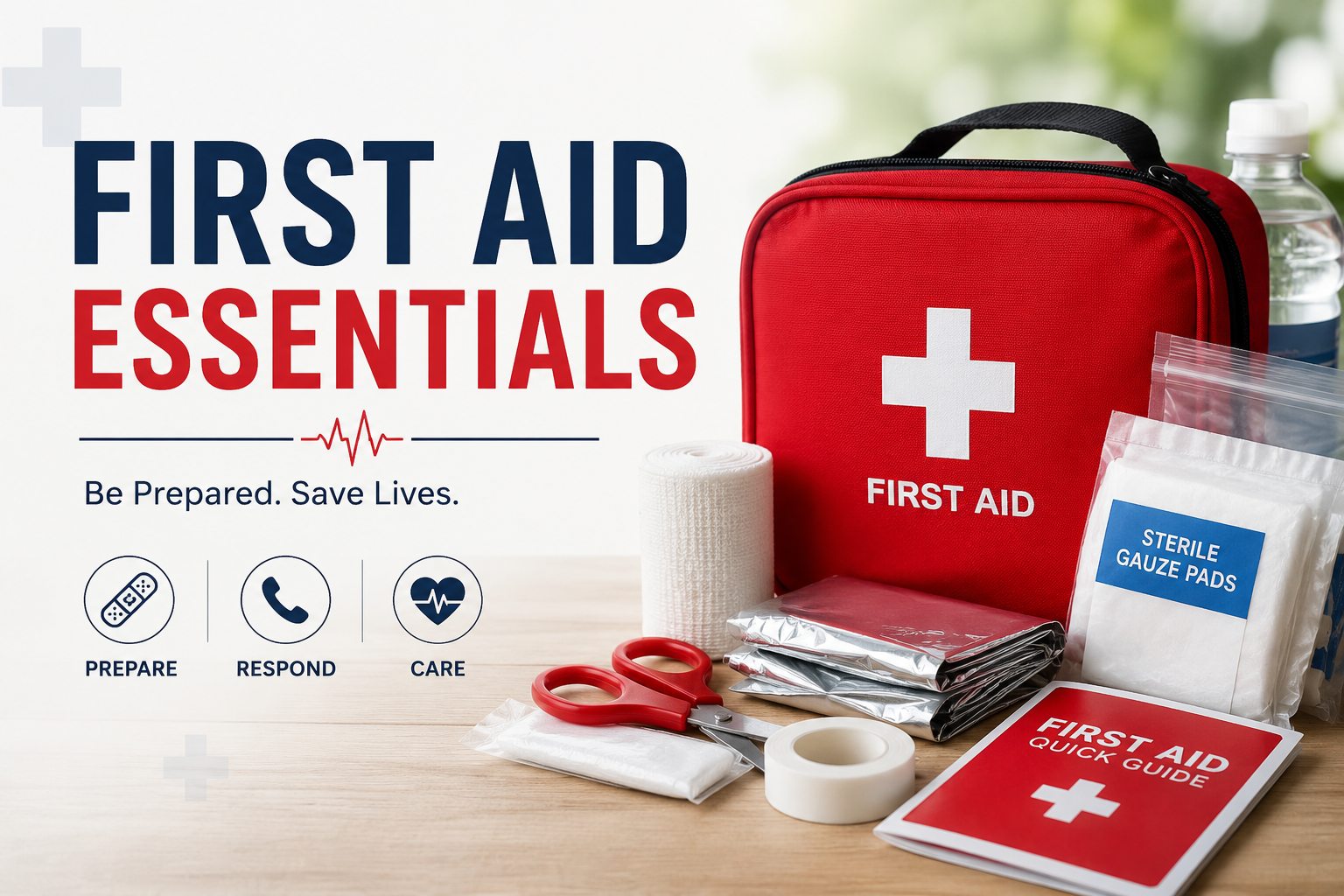
The second major component of 1910.151 requires that “adequate first aid supplies shall be readily available.” Again, OSHA does not prescribe an exact inventory list within the regulatory text itself, but it has historically pointed to the American National Standards Institute (ANSI) standard Z308.1, “Minimum Requirements for Workplace First Aid Kits and Supplies,” as a benchmark for compliance. This voluntary consensus standard, developed in partnership with industry stakeholders, categorizes first aid kits by class based on the type and quantity of supplies:
- Class A kits are designed for workplaces with a lower likelihood of injuries requiring extensive first aid response, typically found in offices, retail environments, and similar low-hazard settings. These kits contain a basic assortment of supplies for treating common minor injuries.
- Class B kits are designed for workplaces with higher hazard potential, greater injury frequency, or a larger and more complex set of risks, such as manufacturing facilities, construction sites, and industrial operations. Class B kits contain a broader range and greater quantity of supplies.
Typical contents specified under the ANSI standard include adhesive bandages of various sizes, adhesive tape, antiseptic wipes or solution, burn treatment supplies (burn dressing and burn cream), cold packs, eye covering and irrigation solution, first aid guide or instructions, hand sanitizer, medical exam gloves, roller bandages and gauze, scissors and tweezers, splints, sterile pads and dressings, tourniquets, and trauma pads for controlling severe bleeding.
Beyond the standard kit, OSHA’s regulations also specifically require emergency eyewash and shower stations wherever workers may be exposed to corrosive materials, as outlined in the third provision of 1910.151. The related ANSI standard, Z358.1, provides detailed specifications for these installations, including requirements that:
- Eyewash and shower stations be located within a ten-second walking distance of the hazard, on the same level, with a path free of obstructions.
- Flushing fluid be delivered at a controlled rate and temperature (tepid, generally between 60 and 100 degrees Fahrenheit) for a duration of at least fifteen minutes.
- Units be tested regularly (weekly activation flow checks are commonly recommended, with annual comprehensive inspections) to ensure they remain operational when needed.
Employers are also responsible for regularly inspecting and restocking first aid kits to ensure supplies remain current, sterile, and sufficient in quantity. An expired or depleted first aid kit does not satisfy the “readily available” requirement, and OSHA inspectors routinely check kit contents during workplace inspections following an incident or complaint.
Construction Industry Requirements
The construction industry, governed by 29 CFR 1926.50, imposes parallel but somewhat more detailed first aid requirements given the elevated hazard profile common to construction sites. Key provisions include:
- The employer must ensure the availability of medical personnel for advice and consultation on matters of occupational health.
- Provisions must be made prior to commencement of the project for prompt medical attention in case of serious injury.
- In the absence of an infirmary, clinic, hospital, or physician reasonably accessible in terms of time and distance to the worksite, a person qualified to render first aid must be available at the worksite.
- First aid supplies must be easily accessible when required.
- Where the eyes or body of any person may be exposed to injurious corrosive materials, suitable facilities for quick drenching or flushing must be provided within the work area for immediate emergency use.
Given the frequency of traumatic injuries in construction — falls, struck-by incidents, caught-in/between hazards, and electrocution, collectively known as the “Fatal Four” — OSHA and industry safety organizations place particular emphasis on training construction workers and supervisors in bleeding control techniques, given that uncontrolled hemorrhage is a leading cause of preventable death in traumatic injury scenarios.
The “Stop the Bleed” Initiative and Modern First Aid Practice
In recent years, national attention on mass casualty events and workplace violence incidents has elevated the importance of hemorrhage control training as a component of comprehensive first aid programs. The “Stop the Bleed” campaign, a national initiative supported by the American College of Surgeons and endorsed by numerous federal agencies, teaches bystanders — including workplace first aid responders — how to use direct pressure, wound packing, and tourniquets to control severe, life-threatening bleeding before professional emergency responders arrive.
While “Stop the Bleed” training is not itself an explicit OSHA mandate under 1910.151, OSHA has increasingly referenced and encouraged this type of training in guidance materials, recognizing that severe hemorrhage can lead to death within minutes, often faster than emergency medical services can respond. Many employers now incorporate tourniquet use and wound packing into their standard workplace first aid training, supplementing traditional first aid kits with dedicated bleeding control kits containing tourniquets, hemostatic gauze, and pressure dressings, particularly in industries with higher risk of traumatic injury such as construction, manufacturing, and oil and gas extraction.
AEDs and Cardiac Emergency Preparedness
Sudden cardiac arrest is a leading cause of workplace fatality outside of traumatic injury, and survival rates drop significantly with each passing minute without defibrillation. While OSHA does not currently mandate that all employers maintain an Automated External Defibrillator on-site, the agency strongly encourages their placement, particularly in larger facilities and those with older workforces or higher physical exertion demands. Many state and local jurisdictions have separately enacted laws requiring AEDs in certain categories of workplaces, such as large office buildings, fitness facilities, and schools.
Where AEDs are present, OSHA guidance emphasizes that:
- Employees should be trained in their use as part of comprehensive CPR/AED training.
- Devices should be maintained according to manufacturer specifications, including regular battery and pad replacement checks.
- Device locations should be clearly marked and known to all employees, not just designated first aid responders, since rapid access can mean the difference between life and death.
Emergency Action Plans and Their Relationship to First Aid
First aid provisions do not exist in isolation; they function as part of a broader Emergency Action Plan (EAP), which OSHA addresses under 29 CFR 1910.38. While not every employer is required to have a written EAP, those that are covered by specific standards requiring one (or who choose to develop one as a best practice) must include procedures for:
- Reporting a fire or other emergency
- Evacuation procedures and emergency escape route assignments
- Procedures for employees who remain to perform critical operations before evacuating
- Procedures to account for all employees after evacuation
- Rescue and medical duties for employees who are to perform them
- The preferred means of reporting fires and other emergencies
The integration of first aid response into a broader EAP ensures that the organization has a cohesive, well-rehearsed approach to emergencies, rather than a first aid program that exists as an isolated checkbox item disconnected from the rest of the safety infrastructure.
Recordkeeping Implications Tied to First Aid
As discussed in the broader context of OSHA recordkeeping under 29 CFR 1904, the classification of an injury as requiring only “first aid” (per the specific list above) versus “medical treatment beyond first aid” has direct consequences for whether that injury must be logged on the OSHA 300 Log. This creates an important, and sometimes underappreciated, connection between the quality and appropriateness of first aid response and an organization’s official injury statistics.
It is essential to emphasize that first aid providers should never withhold appropriate referral to professional medical care simply to avoid a recordable injury designation. Such practices are not only ethically problematic and potentially dangerous to the injured worker, but they can also expose the employer to serious liability, including allegations of recordkeeping falsification if it can be shown that treatment decisions were influenced by a desire to manipulate injury statistics rather than by the medical needs of the employee. A properly designed first aid program prioritizes worker health and safety first, with accurate recordkeeping following naturally as a byproduct of appropriate care decisions rather than as a driver of those decisions.
Special Considerations for High-Hazard and Remote Workplaces
Certain industries and work environments carry elevated first aid obligations due to their unique hazard profiles:
Confined Space Operations: Under 29 CFR 1910.146, employers with permit-required confined spaces must ensure that rescue and emergency services are summoned promptly when needed and, in cases where employers provide their own rescue services, that rescuers are trained in basic first aid and CPR.
Logging Operations: 29 CFR 1910.266 imposes specific first aid training and first aid kit requirements given the remote nature of logging sites and the severity of injuries common to the industry, including a requirement that a first aid kit be present in each vehicle used to transport employees.
Diving Operations: Commercial diving standards under 29 CFR 1910.410 require specialized first aid and CPR training, along with emergency evacuation and treatment procedures specific to diving-related injuries such as decompression sickness.
Agricultural Operations: Given the remote and often isolated nature of farm work, agricultural employers face particular challenges in meeting the “near proximity” standard, often necessitating enhanced on-site first aid capability and clear communication protocols for summoning help.
These industry-specific provisions illustrate that while 1910.151 provides the general framework, OSHA has tailored more specific first aid obligations to the unique risk profiles of various sectors.
Building an Effective First Aid Program: Beyond Bare Compliance
While regulatory compliance establishes the legal floor for workplace first aid, organizations genuinely committed to worker wellbeing typically go beyond the minimum requirements. Elements of a robust first aid program include:
- Regular hazard assessments that inform not just PPE selection but also the scope and placement of first aid resources.
- Cross-training multiple employees per shift, ensuring that a trained responder is always present even accounting for absences, vacations, and turnover.
- Clear, visible signage indicating the location of first aid kits, eyewash stations, AEDs, and emergency contact information.
- Periodic drills and tabletop exercises that test the organization’s actual response capability, not just its paper procedures.
- Post-incident review processes that examine not only the injury itself but the adequacy and timeliness of the first aid response, feeding lessons learned back into training and equipment decisions.
- Psychological support resources, recognizing that responding to a serious injury or witnessing a traumatic event can affect the mental health of first aid providers and bystanders alike, an increasingly recognized dimension of comprehensive workplace safety programs.
Conclusion
Workplace first aid, though governed by a relatively brief OSHA standard, represents a deeply consequential aspect of occupational safety. The requirements set forth in 29 CFR 1910.151 and its industry-specific counterparts establish that employers must ensure ready access to medical consultation, adequately train personnel to render first aid when professional medical services are not immediately accessible, and maintain appropriate supplies and emergency flushing facilities where corrosive hazards exist. Behind these seemingly simple requirements lies a substantial body of practical guidance covering training standards, response time benchmarks, supply specifications, and industry-specific adaptations.
Ultimately, the purpose of these regulations extends far beyond mere legal compliance. Effective workplace first aid programs save lives, minimize the severity of injuries, and reflect an organization’s genuine commitment to the wellbeing of its workforce. From the seemingly mundane task of restocking a first aid kit to the high-stakes application of a tourniquet in a hemorrhage emergency, every element of a well-designed first aid program contributes to a workplace culture where employees can trust that their safety is a genuine priority — not just a regulatory checkbox, but a lived commitment upheld through preparation, training, and readiness for the moments when it matters most.

 By
By