
When we think of a “plantation,” we often picture vast, orderly rows of trees stretching across a rural landscape. While that image isn’t wrong, it is incomplete. Today, the concept of plantation is evolving into one of our most powerful tools for addressing climate change, poverty, and sustainable development. From restoring degraded industrial sites to transforming agricultural land, the global push for tree planting is gaining unprecedented momentum.
In this blog, we’ll explore the profound importance of plantations, their connection to international goals, and how their purpose shifts dramatically depending on the canvas we plant on—be it a pristine green field or a contaminated brownfield.
The Undeniable Importance of Plantations
Plantations—highly managed forests comprising one or two tree species—are far more significant than their physical footprint suggests. Covering approximately 131 million hectares worldwide (about 3% of the world’s forests), they punch well above their weight in terms of utility .
- Economic Powerhouses: In 2000, plantations supplied a quarter of the world’s industrial roundwood. By 2040, they are projected to produce over half of the global supply, taking immense pressure off natural forests .
- Environmental Guardians: Beyond timber, they regulate water cycles, protect soil from erosion, and act as massive carbon sinks .
- Social Catalysts: As seen in the Philippines’ National Greening Program (NGP), large-scale tree planting can be a direct tool for poverty alleviation, creating jobs and transferring valuable assets to local communities .
Aligning with Global Goals: The “Why” Behind the Trees
The resurgence of interest in plantations is not happening in a vacuum. It is a direct response to international frameworks designed to save the planet.
1. The Sustainable Development Goals (SDGs)
Plantations are a quintessential nature-based solution that advances multiple SDGs simultaneously. They are most directly linked to SDG 15 (Life on Land) , which aims to protect, restore, and promote sustainable use of terrestrial ecosystems . By combating desertification and reversing land degradation, tree planting is a hands-on method to “turn the earth green again.”
However, the impact doesn’t stop there. The World Bank highlights how programs like the NGP also tackle SDG 1 (No Poverty) by creating economic opportunities and driving structural transformation in rural economies, moving workers from subsistence agriculture into more productive sectors .
2. The Paris Agreement and Climate Targets
As nations update their Nationally Determined Contributions (NDCs) under the Paris Agreement, forests and land use have moved to center stage. The United Nations Development Programme (UNDP) emphasizes the need to integrate forestry into national development plans . Plantations offer a relatively low-cost method of carbon sequestration. Studies of the NGP found it reduces emissions at a cost of $2 to $10 per ton of CO2, which is significantly cheaper than most technological solutions available today .
3. COP28, COP29, and the Road to COP30
International climate conferences are now hotbeds for plantation finance. The COP Action Agenda on Regenerative Landscapes (AARL), launched at COP28, has mobilized over $9 billion in committed investment. This initiative aims to regenerate landscapes covering over 210 million hectares, reaching 12 million farmers by 2030 . This shows a massive shift where private sector money is flowing into public goods like carbon storage and biodiversity.
The Landscape Matters: Greenfield vs. Brownfield
While the global goals provide the “why,” the local context dictates the “how.” The strategy for planting on a greenfield is entirely different from that on a brownfield. Understanding these terms is key to appreciating the complexity of modern land regeneration.
Planting on Green Fields: Conservation and Agroforestry
A green field refers to land that has never been built on or has not been previously developed—typically agricultural land, pastures, or forests .
The Purpose:
- Sustainable Timber Production: In places like Western Australia, policy is shifting to expand plantations onto previously cleared farmland to create a sustainable timber industry, allowing native forests to be protected from logging .
- Enhancing Agriculture (Agroforestry): On greenfields, plantations aren’t just about replacing farms; they are about integrating with them. Farm forestry, where commercial trees are grown alongside crops, can improve farm productivity by providing shelter for stock and crops, improving water quality, and stabilizing soils .
- Biodiversity Corridors: Strategically placed plantations can act as wildlife corridors, connecting fragmented patches of native forest and preserving ecology within agricultural mosaics .
The Approach:
On greenfields, the focus is on smart design. The FAO suggests that sustainable management involves clear long-term objectives, selecting species suited to local conditions, and often involving small landowners to ensure broad economic benefits . It’s about balancing the production of wood with the protection of the existing soil and water assets.
Planting on Brown Fields: Remediation and Rebirth
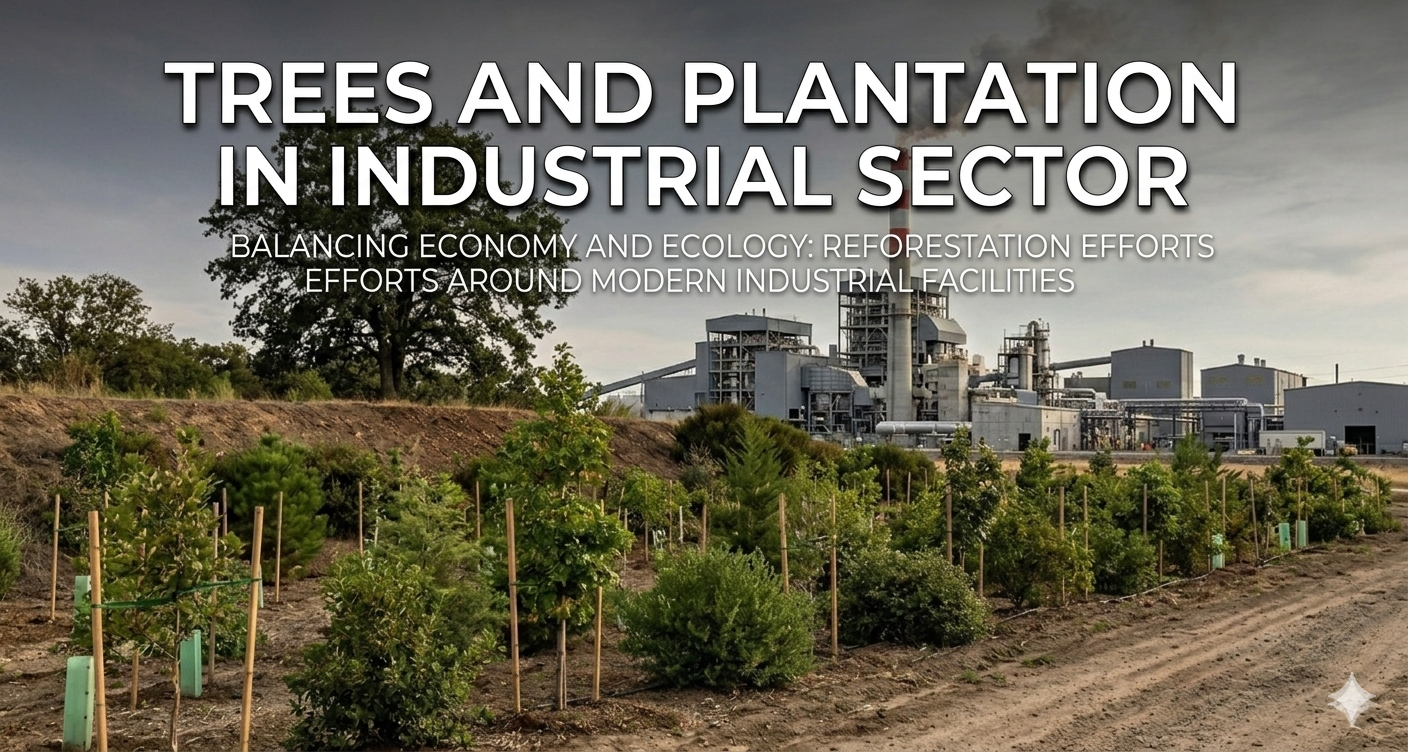
A brownfield is previously developed land—sites of former factories, industrial plants, or abandoned infrastructure. These sites often suffer from contamination or soil degradation .
The Purpose:
- Land Remediation: This is where plantations act as a healing mechanism. Trees can be used to extract contaminants from the soil (phytoremediation), stabilize the ground to prevent erosion, and restore the land’s biological function. Organizations like the UK’s NHBC stress that while developing brownfield land is a priority, it often requires ground pre-treatment or remediation to make it suitable for use .
- Reversing Industrial Degradation: In tropical regions, deforestation and poor industrial practices have led to “increased floods, fast desertification, siltation, and accelerated soil erosion.” The most effective way to reverse these processes is through extensive re-establishment of tree cover .
- Carbon Sequestration with a Side Effect: While sequestering carbon, trees on brownfields convert a liability (an empty, polluted lot) into an asset (a green space or future forest).
The Approach:
Planting on brownfields requires technical expertise. The Yves Rocher Foundation’s PlantForLife programme demonstrates that success requires a tailored approach, working with local NGOs to respect the specific environmental and social context—including the damaged soil conditions . It’s a more complex, but potentially more transformative, intervention.
Real-World Success: The Philippines’ NGP
Perhaps no program illustrates the power of multi-objective planting better than the Philippines’ National Greening Program (NGP). Launched in 2011, it wasn’t just an environmental policy; it was a poverty alleviation strategy .
Local organizations were paid to plant and maintain trees. After three years, they assumed control of the plantation assets. The results were staggering:
- Poverty Reduction: Treated municipalities saw a 6 percentage point reduction in poverty.
- Spillover Effects: Even neighboring villages saw economic benefits, with a 4.5 percentage point drop in extreme poverty indicators.
- Structural Shift: Agricultural employment dropped by 3.8%, while employment in services and manual labor rose, indicating a shift to higher-productivity work .
This proves that when designed correctly, plantations can deliver both for the globe (carbon sequestration) and for the local community (economic development).
Looking Ahead: The Future of Plantations
As we look toward COP30 in the Amazon, the focus is sharpening on how to finance and scale these efforts. The launch of initiatives like the Landscape Accelerator Brazil (LAB) shows a move toward “place-based collaboration.” By focusing on specific biomes like the Cerrado and the Amazon, and using blended finance to de-risk investment, these programs aim to unlock the massive potential of regenerative landscapes .
The future of plantations is not about planting a line of trees and walking away. It is about integrated landscape management. Whether it’s a greenfield in need of smart agroforestry or a brownfield in need of detoxification, the humble tree is being recognized as a critical piece of infrastructure for a sustainable future.
The challenge now is not if we should plant, but how and where—and ensuring that the communities on the ground are the ones who benefit most.


 By
By